1.
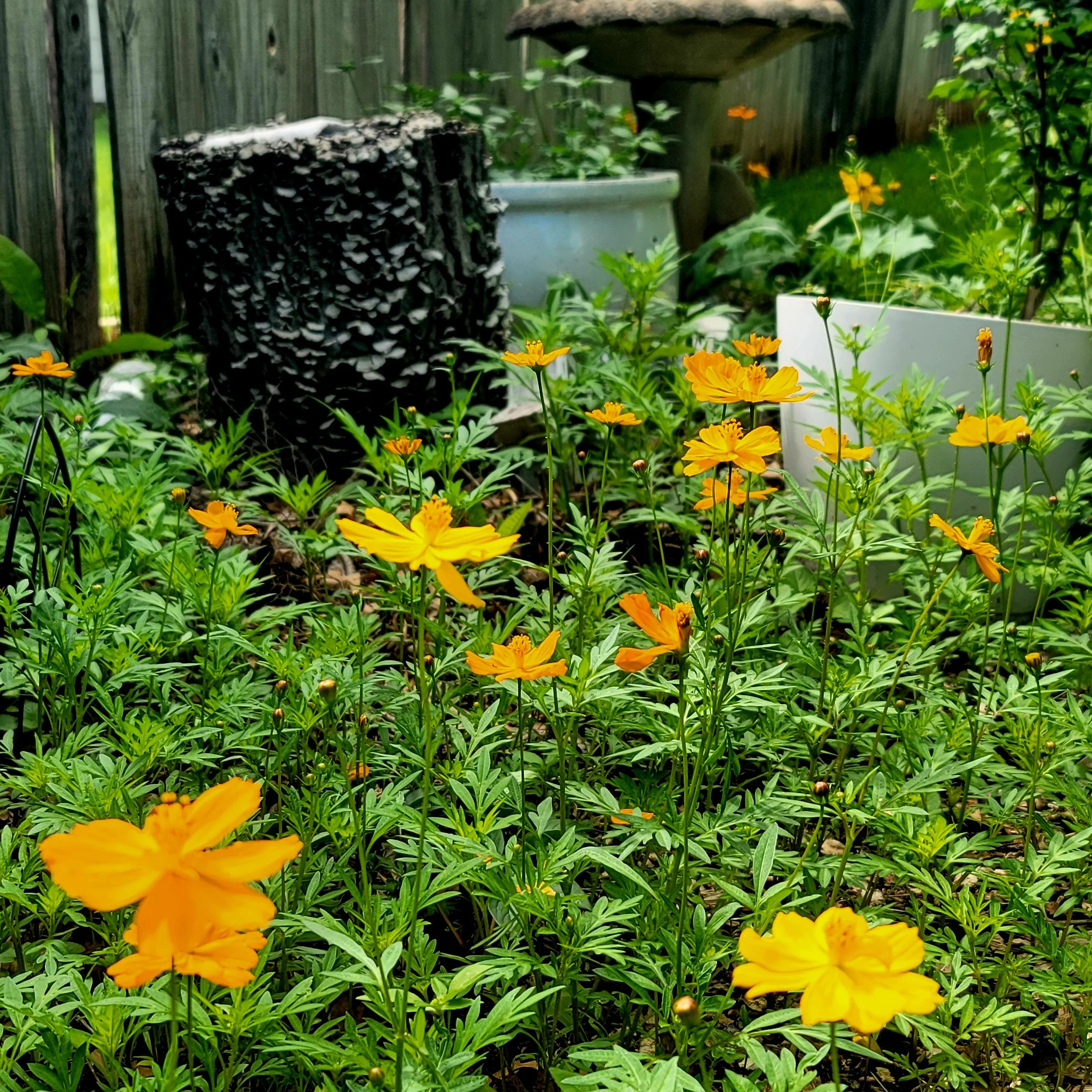
Tie up your shirt and find your loosest skirt. Turn nut brown in the sun. The summer brews her storms and lights her fireflies. We cling to sweaty drinks and the color green, hoping for a breeze.
2.
I wish to greet the dawn like a sunflower, with my face turned cheerfully to her bright, warm gaze. I wish to follow the path of her glory through the heavens as the day waxes and wanes. I wish to grow like a cosmos flower, sometimes big and overgrown, sometimes small and fluttery, always ordinary, always cheerful, always spreading my seeds far and wide. I wish to be a zinnia clothed in layers and layers of long-lasting petals. If I am bent down, I simply grow up, my blooming going on and on with a sturdy grace.
3.
Nothing ruins bedtime faster than a roost bar tumbled down during a nest box dust-up and not yet set right. Sif has made it abundantly, loudly clear that this is entirely unacceptable. It’s bedtime, and the bed isn’t ready. She has worked hard all day, what with the dust-bathing, the fight-settling, the hawk-watching, the patroling, the scratching and pecking, and the egg-laying. Why is the bed not ready? She refuses to go to bed if the roost bar is not in its proper place. She makes her ire known to the whole family. How dare you?
4.
Ingrid wants nothing more out of life than to escape her more-than-generous yard. It doesn’t matter how many times I tell her that this part of the yard is hers, and this part of the yard is mine; she wants in my part, in my flower bed. It doesn’t matter how many times I tell her how spoiled she is, that other chickens do not have huge yards that they only share with four sisters; she wants in my part. All day long we play this game. She gets out. I put her in. She gets out. I put her in. She doesn’t even argue or run away when I come get her. I’ve clipped her wing! She still wants out into the yard; she still gets out into the yard.
One morning, I faced the sad fact that my zinnias had to go. They’d gotten powdery mildew during our wonderfully wet spring and looked terrible. They were long, leggy, and the bottom half of every stem was nothing but dead leaves. They wanted to bloom, but they just looked terrible. When the temps hit the 90⁰s and 100⁰s, a view that includes dead and dying plants isn’t pleasant or cooling. We already feel like we’re getting crispy. And not autumnal crispy, but drying out, heat-induced crispy. I started pulling, saving any blooms still in good shape to take inside.
Over the fence hops Ingrid. She rushes towards me, delight obvious in her run, her face, her fluffy butt. “I’m coming! I’m coming to play in the garden too!”
I almost couldn’t put her back; she was so happy and excited that we could be in the garden together. Thank the good Lord for pack and flock animals that bond with us humans. It is a sweet gift, but chickens will use this gift to manipulate you. Staying strong, I took Ingrid back to her yard, poor, sad hen. Maybe in glory women can have beautiful flower gardens and chickens together. But glory this is not, so we keep up the fences, flowers on one side, hens on the other.
5.
There are two extremes that worry those with livestock: high heat and deep cold. Both require extra work and extra vigilance. They are the moments when a lot of people decide this isn’t the life for them. When you want to be inside in the A/C or nestled deep under the covers, you have to face the extremes to make sure your livestock is surviving. Thankfully, God designed animals to tolerate a lot of situations in many unique and clever ways, but He also gave us dominion (not domination), and sometimes they need our help. The summer temps are finally in the hundreds, and no rain is in the forecast. Chickens pant like dogs, hold their wings out, and expel heat through their feet and combs. They dust-bathe and rest during the heat of the day. I will say, when choosing chicken breeds, it’d be nice to have a few that said, “these are heat tolerant.” I can limp a hen through three days of snow, but weeks and weeks of heat? I need chickens that are okay with that.
One of the ways I help them is with a tray of cold water that they can stand in. Sigyn first figured this out when she walked on the hot coop roof. I found her standing in her water bowl. After that, I started keeping a tray of water out for them. Sif learned from Sigyn. Astrid always had a hard time understanding standing in the tray, so I would soak the ground around it. Anyone who couldn’t figure out the tray could figure out standing in cool mud or lying in it. The new chicks learned right away from Sif and Skaði to stand in the tray. I’m hoping to get a second tray soon. Also, can we just notice how cool it is that each generation teaches the next what they need to know about their home and me.
I went out to check on them one evening and found Tove—my hyperactive White Leghorn—just standing there. She didn’t look right at all. I was concerned it might be heat stress, so I brought her inside and stood her in the sink with some cool water. She hardly protested, which isn’t a good sign. I took her back out, but she still seemed stressed. I set the kennel up in the laundry room and got some water in a bowl. After about fifteen minutes she started perking up. I took her back outside, and she seemed fine.
The next morning, she laid an egg out in the grass as soon as I let them out of the coop. She had just laid an egg yesterday mid-morning. It hadn’t even been 24 hours. I’m not sure if she got excited to be out and then realized oops! Egg! Or if something was wrong. All day she seemed fine, then in the evening I found her under the fig tree again, just standing. As I dug through the branches to reach her, she laid another egg! This one was soft-shelled. I gathered her up and put her feet in the water for a few minutes, then held her in my lap. She fell asleep. She didn’t seem heat-stressed, but tired. I moved her into the coop to sleep and keep her away from some of the more aggressive chickens.
My gut right now is that she is new to laying, and she’s sorting it out. Astrid took a couple of weeks to get in a good rhythm and laid a few weird eggs before she got going. When you have a small flock, you don’t have much choice other than high production breeds, but I’ll tell you, I think they’re brutal breeds. They always seem to have issues with their eggs. Verðandi is a dual-purpose breed, so I’m waiting to see if her laying is gentler and if she has fewer issues in the long run. If I had the space, I would have a large flock and fewer high producers. We bred them for almost daily eggs, but I think it’s hard on their bodies. My four-eggs-a-week chickens seem to go longer than my 6-eggs-a-week chickens. That’s my gut right now, but I’m still gathering hard evidence on that.
6.
The moment when you can tell Verðandi, Tove, and Ingrid know their names is when you step outside and yell, “Ingrid!” and her head comes popping up out of the flowerbed.