Ode to Freya
“Are not two sparrows sold for a penny? And not one of them will fall to the ground apart from your Father.”
Matthew 10:29
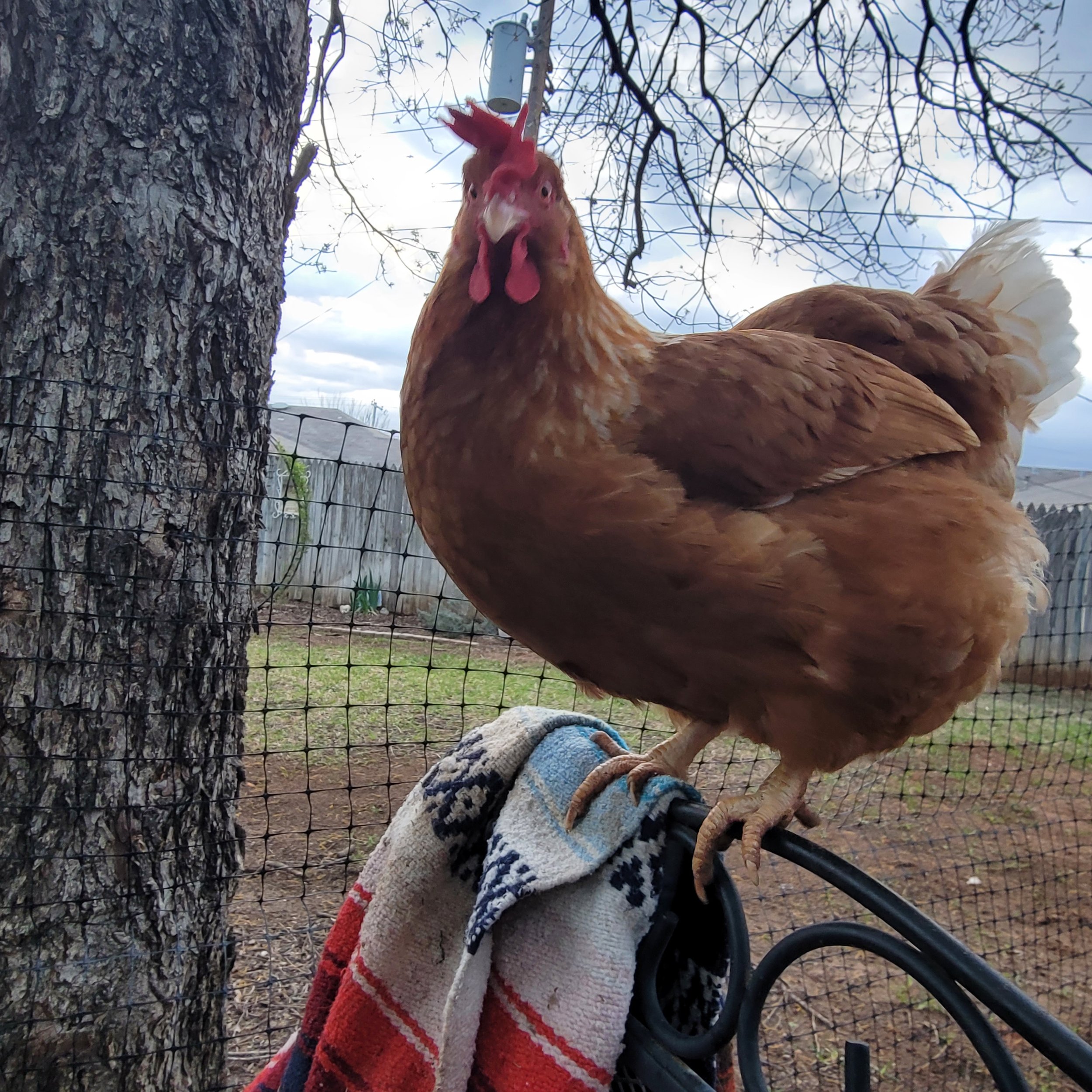
There is a unique horror to lifting the dead, starting to stiffen, body of a once alive pet, of realizing the little, mortal soul is gone forever, feeling that empty, yet so heavy, weight in your hands. There is a unique horror to knowing you weren’t there for her last terrifying moments, that while she was being killed, you were watching TV and drinking bourbon, that you weren’t there to protect her, that you broke that trust in her last moments. There is a unique horror to seeing the feathers scattered about, knowing they were hers. There is a lingering horror of head-counting to five instead of six, to saying my original 3 instead of my original 4, to starting to say her name out of habit, but she’s not here. If you didn’t know the world was fallen and broken, try lifting the horrible, empty weight of a little body.
Added to all this is the sense of shame that I almost threw her body out with the trash, like something unimportant, old, or broken. But as I stood in the dusk with that awful white trash bag sitting there as Freya’s funeral shroud, I couldn’t do it. I couldn’t throw her out with the trash. This is her home. The only home she had ever known. I didn’t want her body in the trash truck; I wanted it in the earth beneath my flowers. So, as the fireflies flickered about, I dug a hole in the back flowerbed, lifted Freya one last time, and said goodbye to my sweet hen.
I want to remember Freya, but I’m only a finite woman who will eventually forget this first death of one of my chickens, so I’m writing this ode, a requiem to remember. Without Freya, Sigyn would have been killed by a snake. But because Freya ran in the direction of the back porch, I saw her and knew something was wrong. Freya was always the lowest hen on the hen totem pole. She often wandered around by herself, clucking quietly her gentle complaints.
Freya was my egg-bound hen. She stood in the flowerbed, so still, not right at all. Freya wasn’t a super affectionate hen. She didn’t sit in my lap or stand on my shoulder (she would sit contentedly at my feet as long as no one bothered her). On that day, she let me pick her up without protest, sat quietly in my lap, and allowed me to help her. It was as if she knew she needed help and knew that I would help her. Also, have you ever seen a constipated chicken lay an egg? It’s pretty funny.
I used to feed Freya on the side. She quickly learned to fly up on the coop and wait for her treats, or she would come around the side of the bucket and eat out of my hand where her sisters couldn’t see her. She loathed Frigg and Skaði. When I first got them, my sweet, gentle Freya became a terminator. She stalked them around the yard, never giving them a moment's peace. Sigyn even reprimanded her a few times for her constant pecking of them. In the few weeks before she was killed, Freya started to bond with them. I would look out and see them hanging out together, eating, preening, and dust bathing.
I think I will miss her sweetness and her little clucks the most. She always had quiet clucks unless something was really wrong or she’d laid an egg. Over the past few days, I’ve caught myself looking for her, glancing around just starting to call her name. I knew that I would ultimately lose these hens, that they would be killed, get sick, or even die natural deaths, that I would need to start augmenting my flock, replacing hens before they needed to be replaced. I spent my formative years on a farm. I knew this would happen. (This is why I like my homemaking with a bit of grit. Grit is required.) I just didn’t really expect to be standing in the laundry room ugly-crying as my husband talked with the dog’s owners. I didn’t expect how deeply I wanted to hide the pain inside myself where it couldn’t be seen by anyone else. I didn’t expect it to be so vitally important to me that she was buried in the backyard.
And then, I didn’t expect to remember the verse I started with. You know, most people don’t realize how much personality chickens have. I’ve had many people look at me agog when I talk to them about my hens’ antics and their affection. Some people find them repulsive; others find them frightening. I think many of us have become so used to the big chicken mills that supply our eggs and meat, the ones stuffed with white chickens living short lives, that we forget about the brown hen in the yard, the brooding hen leading her newly hatched clutch about, the beautiful roosters giving up their lives to protect their flock. We think of the poop, mud, and possible lice in the feathers. We don’t think about the fact that they can learn their names, that they notice when one of them is missing, that they are afraid of everything and curious about everything, that they will sit on your shoulder to look at the dawn, take a nap in your lap, and follow you around the yard with little pitter-pattering steps.
Frigg has the cutest startled chirp when faced with any treat she’s never had before. Sigyn charges anything she thinks might be dangerous. She’s braver than she is smart. Skaði gets the zoomies when it’s treat time. She can run faster and fly better than the others, so even though she’s the henpecked one, she gets more treats than anyone by being fast. Sif lays like clockwork every morning. She was my wildest hen until she started laying, then she wanted me there all the time. She screams at bedtime if everyone else is not already in bed. Astrid is such an old lady. She likes to nap a lot. She likes to sit beside me when I’m outside. Leaves and gardening tools and any fabrics terrify her, but I’ve seen her charge a hawk that dared to land in her yard. Since Freya died, she’s been clingy in a way she hasn’t been in a long while.
So I’m faced with the loss of a producing pet, I haven’t even started to calculate the monetary loss of several more years of eggs that Freya would have given me, and I thought of this verse. Instead of being angry with God for the loss of my Freya, I felt a certain peace. God is good, and He cares about His creation. Freya’s death wasn’t unknown or outside of His control. She wasn’t unknown to Him. Not many people may realize that a chicken makes a sweet companion, but God knows. He set Freya in my path a little over a year ago, randomly, humanly speaking, chosen by the Tractor Supply guy, and gave me a whole year with her. A whole year. I don’t know why, but I found it a great comfort to know that the Lord created her, loved her, and was in charge of her beginning and end and that it mattered to Him, she mattered to Him. He knows when the sparrows fall. He knew when Freya fell, too. And so while I felt horror—I can still feel the death-weight of her body in my arms—and while I have cried many tears, and while I knew this was a pain I have chosen, because I could have chosen not to love, I also felt comforted, because I knew she mattered not just to me, but so much more to God who created her and gave her her year of life. God isn’t mean and doesn’t waste anything. God has declared His creation good. He has told us He knows when each sparrow falls. That is so much bigger than me. I only know that my chicken is dead. He knows about every bird that dies. I felt a calming peace in that truth.
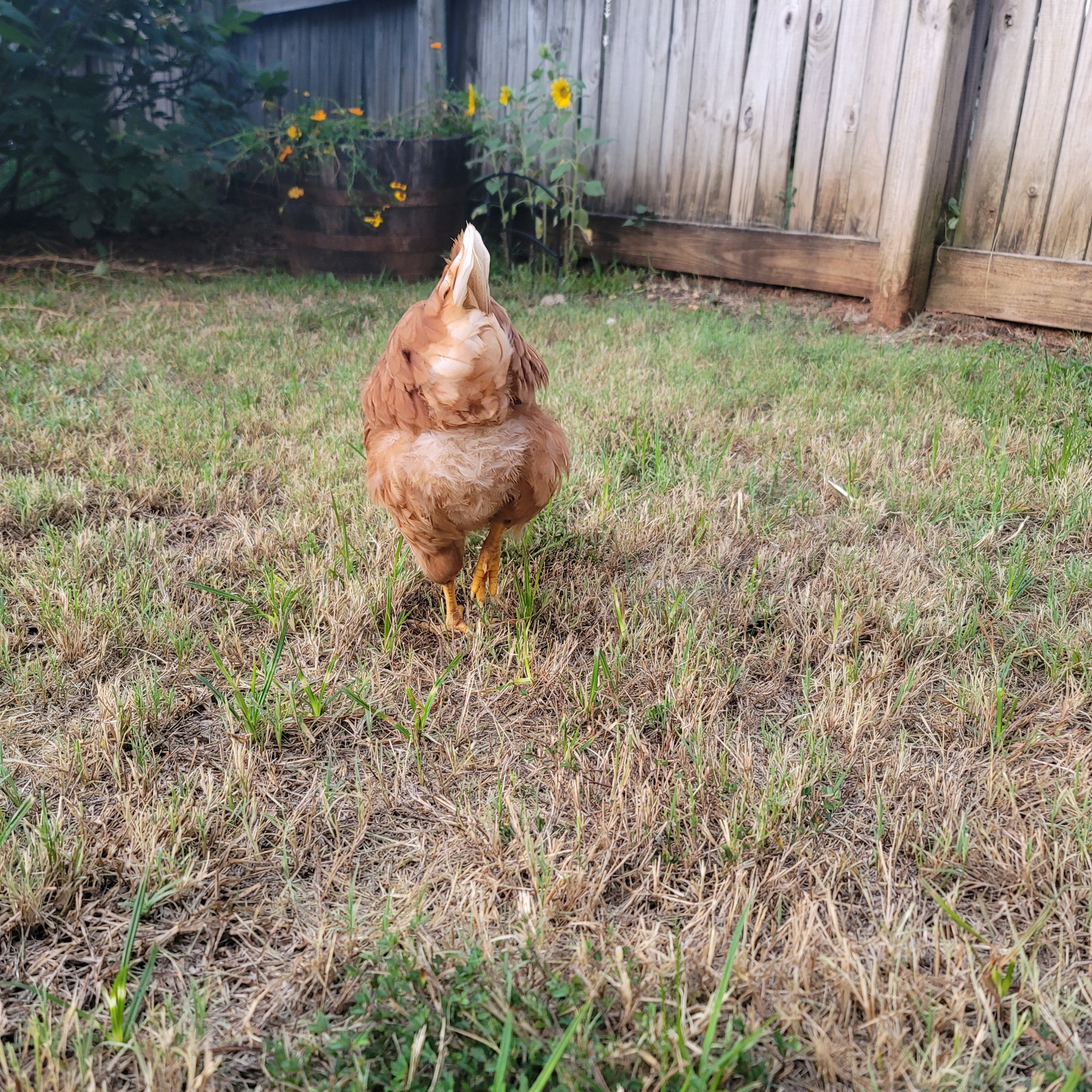
Over the weekend, encouraged by my husband, I spent a lot of time outside being vigilant as my neighbors tried to resolve the situation. On Sunday, I had to come home repeatedly. My husband reminded me of the idea of the donkey in the ditch. God isn’t a God who disregards animals. He has given specific commands that, even on the Sabbath, dedicated to His worship, animals still need to be taken care of. My husband reminded me that this was my donkey in the ditch. Until we could be sure the dog couldn’t get back in the chicken yard, I had a responsibility to protect my flock. Even on Sunday. This also gave me a sense of peace. Our good God knew that animals would be hurt, get themselves trapped, and need extra care. He didn’t demand like a tyrant that we abandon our animals in their need for His worship. He told us to tend that donkey that fell in a ditch like a kind Father.
A kind Father.
That is what Freya’s death brought to my heart and mind: how kind my heavenly Father is to this little child of His who loves her chickens. Even in Freya’s death, I was able to hold to the truth, trust Him, and find solace in who He is as Creator and as my Father. I gained a deeper understanding of His gentleness and compassion as I buried my first hen. It is amazing to me that He gave me this gift of trust when I could have decided at this moment not to trust Him at all. I could have turned Freya’s death into bitterness against Him and my neighbors, but He gave me love and even joy after the horror of the weight of her empty body and her feathers scattered all over the yard. So I keep loving little animals that will all die probably long before me, just like my heavenly Father knows each sparrow, knowing it will break my heart, but also knowing it is worth doing. By practicing with these little, mortal souls, I am practicing to better love the big, eternal souls around me, knowing that they will all break my heart, that I will lose them someday, but that the Father sees, knows, and loves.
“To love at all is to be vulnerable. Love anything and your heart will be wrung and possibly broken. If you want to make sure of keeping it intact you must give it to no one, not even an animal. Wrap it carefully round with hobbies and little luxuries; avoid all entanglements. Lock it up safe in the casket or coffin of your selfishness. But in that casket, safe, dark, motionless, airless, it will change. It will not be broken; it will become unbreakable, impenetrable, irredeemable. To love is to be vulnerable.”
CS Lewis, The Four Loves

Click on the image to visit our Knitting Circle.
Available on Amazon.

Thank you for the wonderful editing, Sarah!