Life, Death, and the Woman
I have found a certain core of calm in the acceptance of my womanhood that served me well the weekend my chicken died a violent death. I was a tomboy[1] growing up. There can be no doubt of that. Most of my friends were boys and I have a love of guns and the military that not many women share. I grew up in a conservative, traditional home, but once I got out into the workforce, I existed for the majority of my day under the oppressive shadow of feminism and swam in our frantic, self-focused, masculinity-dominated culture. By masculinity-dominated, I mean that our culture, stories, leaders, and philosophers seem hell-bent on erasing women. They seem to be striving to create one gender that is masculine. Oddly, feminism seems to be on the front line of this effort. As they have pushed motherhood and homemaking out of the definition of womanhood, it has become more and more challenging to know what a woman is to be and to do. It is hard to hold on to one’s value. What do I bring to the table if I’m not a man?[2]
I remember a stage in my 30s where I spent a lot of time knowing what I didn’t want to be and pulling a lot of weeds out of my heart garden, but I didn’t know what to replace the weeds with. I had no seeds to sow. I saw so much feminine toxicity that that was all I saw. What am I supposed to be? I felt like I was screaming into the abyss and all I got back was “… well, don’t be a man…” Don’t try to be a man or act like a man or do what men do. That’s all well and good, but what do I replace this “not man” with?[3]
It felt like being told over and over not to despair but never being turned around to see hope. The answer to despair isn’t not to despair, the answer is to hope!
I believe that I shall look upon the goodness of the Lord
in the land of the living!
14 Wait for the Lord;
be strong, and let your heart take courage;
wait for the Lord!
Psalm 27:13-14
So what was the answer that brought calm? Two things:
A) Acceptance with Joy: I am a woman! I do not wish to be a man. I have no desire to be one of the guys, at least no longer. I no longer believe that only men get to have fun and go on adventures. I want to be a woman in all the richness that means. I want to be a sturdy woman. I love masculinity, but I want to love it from a position of femininity. I don’t want to be expected[4] to act like a man. I’m not a man. I’ve seen this in a growing willingness to accept help, even from perfect strangers in the grocery store who offer to grab a case of water bottles for me and load them on my cart. God bless older men well trained by their mothers! Could I do it? Absolutely. But I can also let this man do it because he kindly offered. Allowing myself to accept the respect and kindness of this stranger blessed me greatly. I have nothing to prove about my strength by loading the water bottles myself and letting him do it allowed me to femininely accept help. Wearing skirts is another way I’ve accepted my womanhood with joy. Now this is very personal. I don’t think women need to wear skirts. For me, someone constantly tempted by too much intensity, skirts helped me get in touch with my feminine side. They help me remember beauty, grace, flow and the dance of life. I still wear jeans. I still love my sweatpants and hoodies. I so appreciate living in a day and age where I can wear a skirt and then sweatpants. Not fighting against skirts and dresses, but leaning into them, has blossomed into a better sense of my own femininity in a happy, laughing, joyous way.[5]
B) Motherhood: All woman from conception to death are mothers at our core. Yes, there is a lot of sin, brokenness, and confusion about this, but at our core, to be a woman is to bring life into the world and nurture it. I think all little girls know this because we mother babydolls, siblings, stuffed animals, and our pets as soon as we get going. We also create beauty as soon as we can hold a glue stick. Little girls are busy creating, creating, creating. I think my infertility combined with our choice to focus on the boutiques clouded this for me. Motherhood was something that would come or not come at a specific time and place. While that is true on a certain level, it isn’t entirely true. I am not a mother. I have produced no offspring, but I am a woman and to be a woman is to be a mother: one who brings life and nurtures and nourishes it. Because I didn’t understand this as both an event and part of my core, part of my creation, I spent several years waiting to be something I already was like a tree standing around hoping to someday be a tree, meanwhile it is producing shade and its leaves are turning in autumn. My mom first planted the seeds in me that I was a mother even in my infertility by including me in Mother’s Day celebrations with my sisters and telling me she never saw me as anything but a mother. Leila Lawler watered those seeds in my fallow garden of womanhood. Recently, my dear Deanna repeated this back to me when I was struggling to be gracious to a homemaking sister who wasn’t defining and cutting her lines as cleanly between childrearing and homemaking as I would have liked. Deanna suggested I look at it from a different angle: the universal motherhood of all women.
This all came to a focal point for me over the last weekend of September as I sat by one of my chickens while she died.
The neighbor’s dog got in my back yard again.[6] I heard the cries for help too late. Frigg was still alive but badly, violently wounded. A hurried discussion with my husband and the neighbors lead us to the decision to take her to an emergency veterinarian. Her healthcare needs, even assisting her death, were wildly beyond my abilities to facilitate. The only place that would accept chickens and that was open was over 30 minutes away. I did a quick doublecheck of the other hens (unfortunately missing that Astrid was also wounded), locked them in their coop, loaded Frigg up, and rushed to the veterinarian. I had no charging cord, book, water, sweater, or snacks. I barely remember the drive, just talking to Frigg the whole time, afraid she’d die on the way. Long, long story short, they found way more damage once they started surgery than the original assessment. Frigg was stitched back together and given a sedative. I was sent home late that night with a sleeping but alive Frigg. About 16 hours after her surgery, Frigg died. I could never really get her to wake back up. While the final moment was quick it was also terrible. A great shudder, beak open, gasping, eyes wide, staring but not seeing, then she sank down and laid oh-so-hauntingly still. I was right with her. By the time I got her in her grave, she was stiff. Another horror. [7]
Sitting in the vet for hours was a painful but gentle tenderness. An emergency veterinarian clinic is dealing with people in a panic for the little, mortal souls they’re responsible for. I was unbelievably thankful for the two receptionists who mothered every person and every animal that came through the door. I saw more strangers crying that night than I have in a long time, men and women. I cried in front of strangers more than I have since my extra-Dad died. The receptionists were so gentle, so understanding. They loaned me a charging cord. They let me sit quiet in my stomach-clenched vigil. Even being repeatedly called Frigg’s mom didn’t offend me in the least. In that moment, chicken or no, I was Frigg’s mom. Whether they knew it or not, all the women I worked with that night were tapping into their mothering instincts to comfort stressed and sad people. Honestly, it was far kinder an environment than many a human hospital I’ve sat in.
So as I circled my home on Sunday between a dying Frigg, an injured Astrid, and a living Sigyn, Sif, and Skaði, so brain dead from lack of sleep that I completely forgot to watch the church live stream, unable to stop checking on everyone, there was a certain calm strength in my core because this was me being a woman, fully and completely. This was in a way part of my God-given earthly glory: attending birth and death. I raised Frigg from a baby. She was a day old when I got her, and I was determined to be there at her death. She was mine. My little, mortal soul to tend, and tend her I would through every step of her short life.
In Genisis 3, Adam names his wife Eve. Eve means the mother of all living. That name is such a defiant act of hope in God’s promises because Adam gave it to her after the Fall, after death, sin, and brokenness came into the world because of her. This was such a lifting up, an act of mercy and forgiveness. If I am a “Daughter of Eve” then I too am a mother of the living. Plants, animals, and, most importantly, people are my field of endeavor. They are my battlefield, my garden, my glory. I am her daughter, and I am determined to face the joy of birth and the horror of death. As I exhaustedly kept a watch on Frigg, talking to her, monitoring her, I felt right. Not because this was right. This was entirely wrong. I’m still shaken by the horror of the violent death I witnessed. Death is a curse. I felt right because this was what my hands were made to do. I had sheltered this small creature in her infancy, and I was sheltering her again in her death. This was what I was made to do because I am woman, and thus, I am a mother, and at that moment, just like when she was a baby, she needed a mother.
So just like with Freya, losing a chicken has been difficult, heart breaking, and horrifying. But God is good. He has strengthened me, given me courage, and is turning a great evil to good. He is my loving Father and is gently leading me through the sorrow. Monday morning, I read the last third of Watership Down. Providentially setting things in place so that this was the book I was reading after I lost my Frigg was so gentle. This is a familiar book, a beloved book, even the copy I have is like a child’s snuggy, I’ve read it so many times. As always, I was touched by the sheer, unapologetic femininity of the does.
“Bigwig realized that he had stumbled, quite unexpectedly, upon what he needed most of all: a strong, sensible friend who would think on her own account and help him bear his burden.” (Lord, let me be this kind of woman for my husband, my church, my friends, and family.)
“Both Hyzenthlay and Thethuthinnang told Hazel that they had had no idea how much of their frustration and unhappiness in Efrafa had been due simply to not being allowed to dig.” (They couldn’t make homes and nests for themselves, their mates, or their young, and were despairing.)
“Be quiet,” said Hyzenthlay. “The bucks aren’t talking like that and why should we? I’d rather be here now, as we are, than never have left Efrafa.”
These three quotes representing the calm, grace, and courage of the does, really jumped out at me, they comforted and encouraged my soul. Once I finished Watership Down—much more slowly than normal because I was keeping a close eye on Astrid—I returned to The Fellowship of the Ring and was able to just rest in its familiarity.
The Lord helped me face clean-up of all the chicken stuff on Tuesday with a song in my heart because every chore I did screamed into the abyss that life was here! I’m alive. My husband is alive. Astrid and my other hens are alive. My plants are alive. My friends and family were alive.
All this life surrounds me and needs to be tended too. I better get to work.
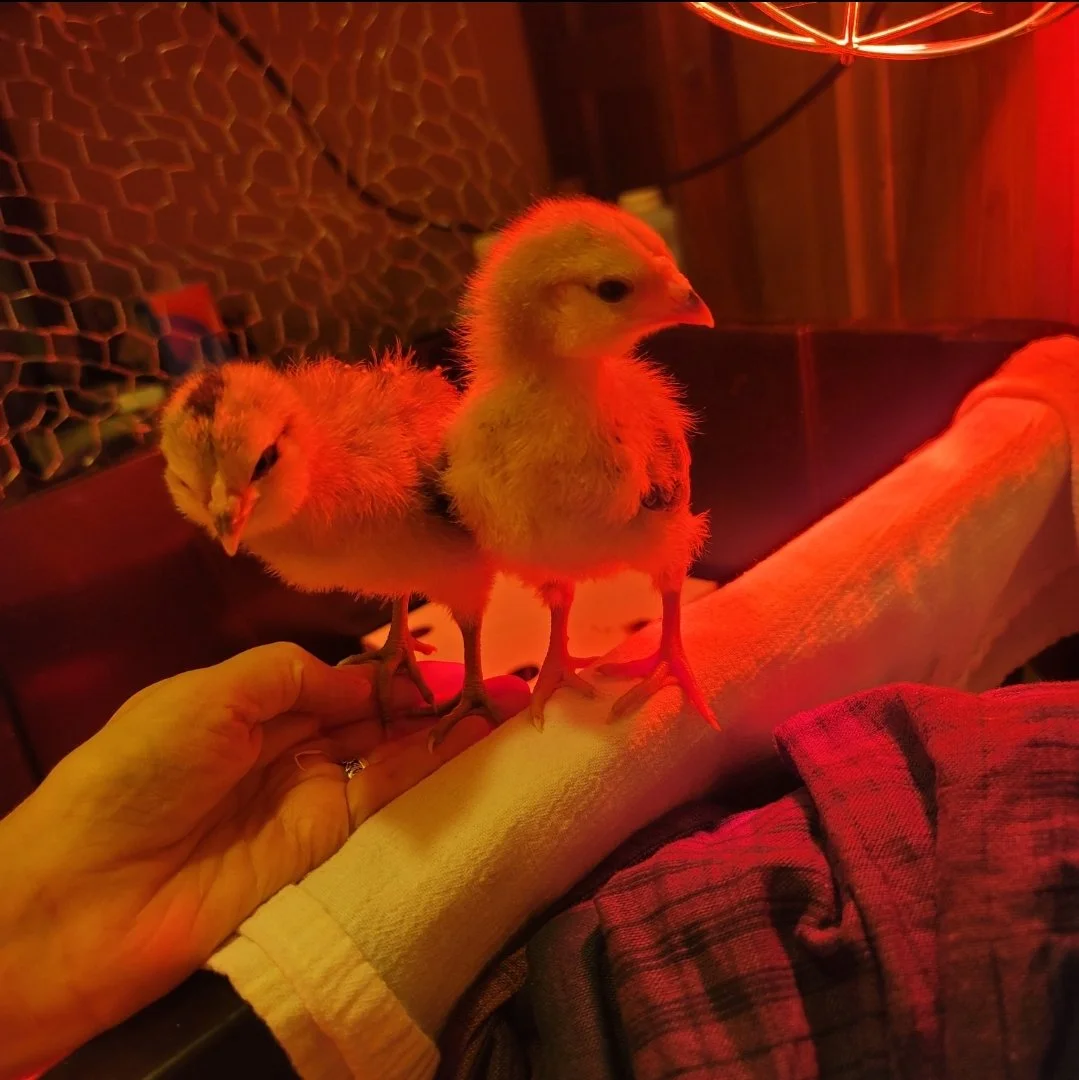
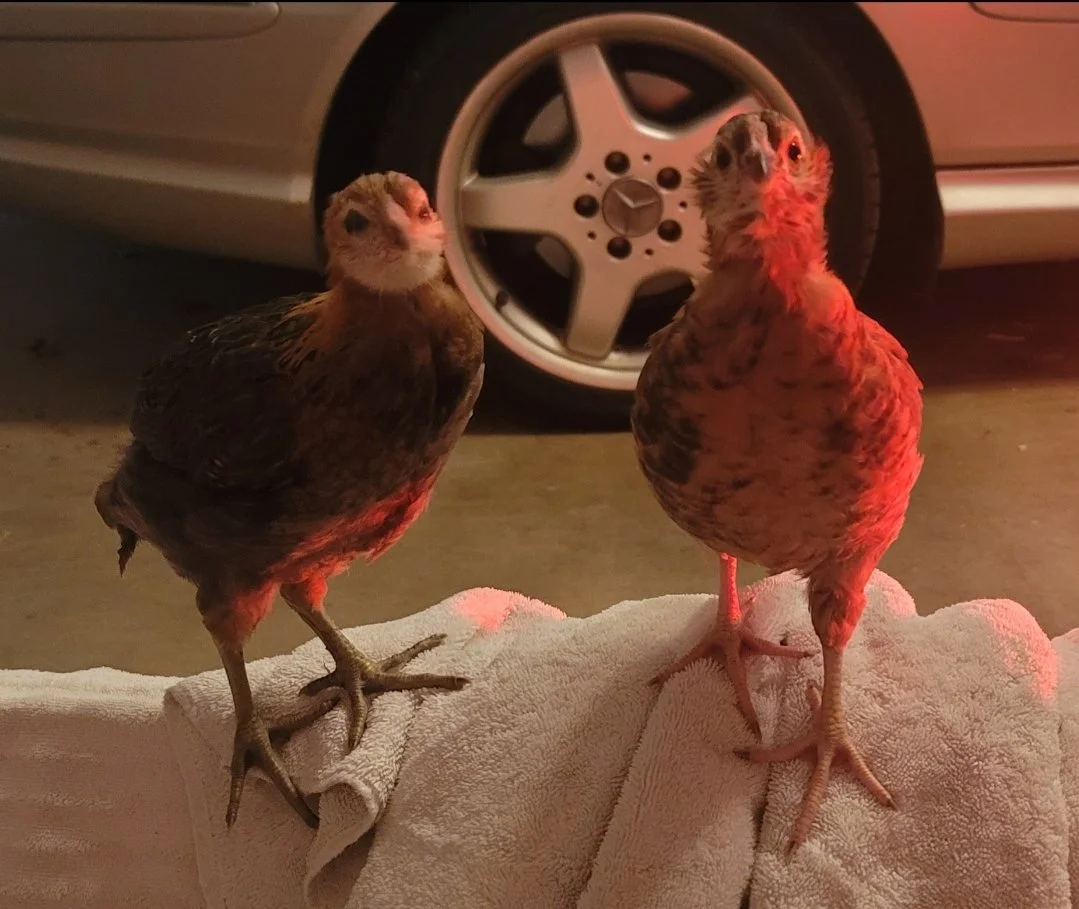
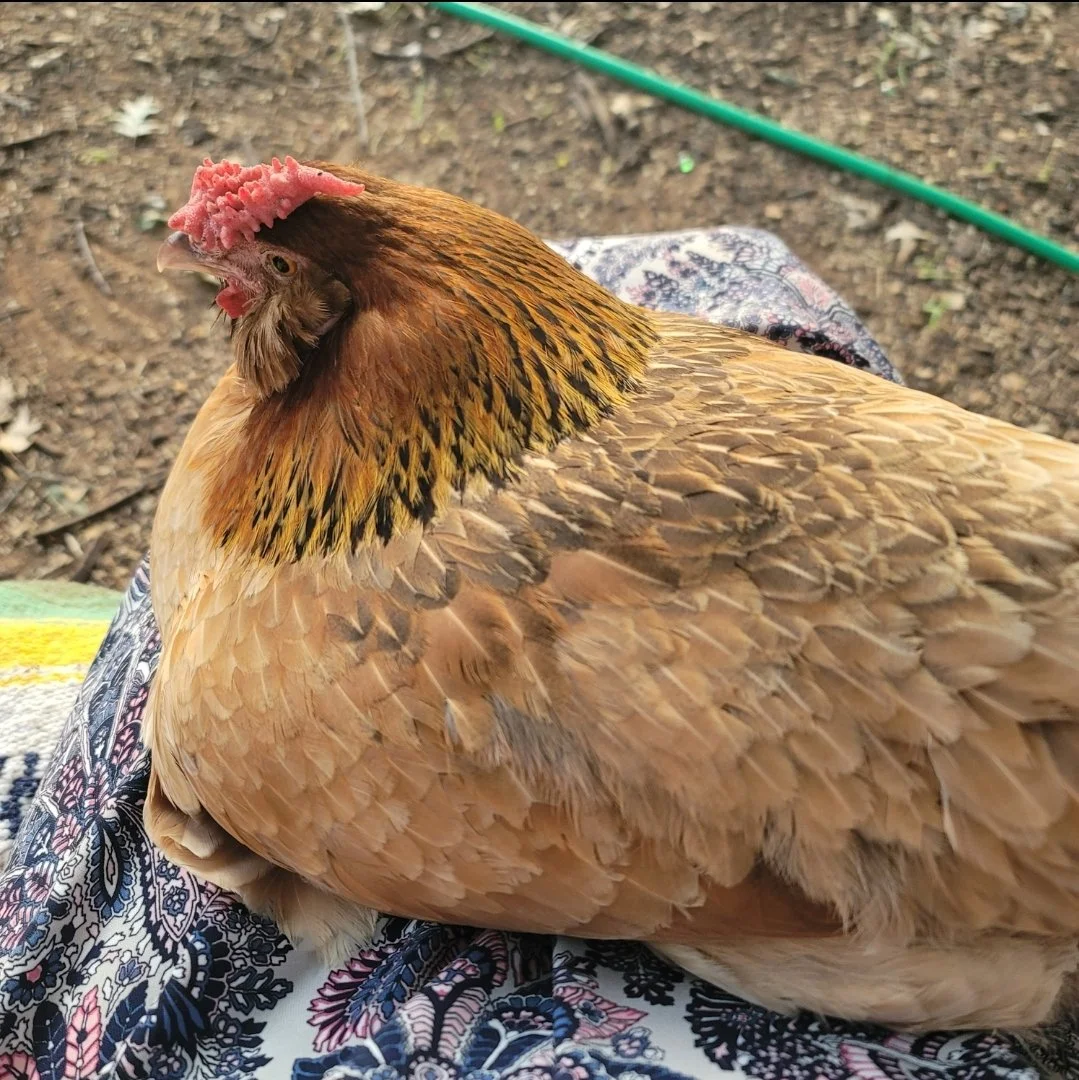
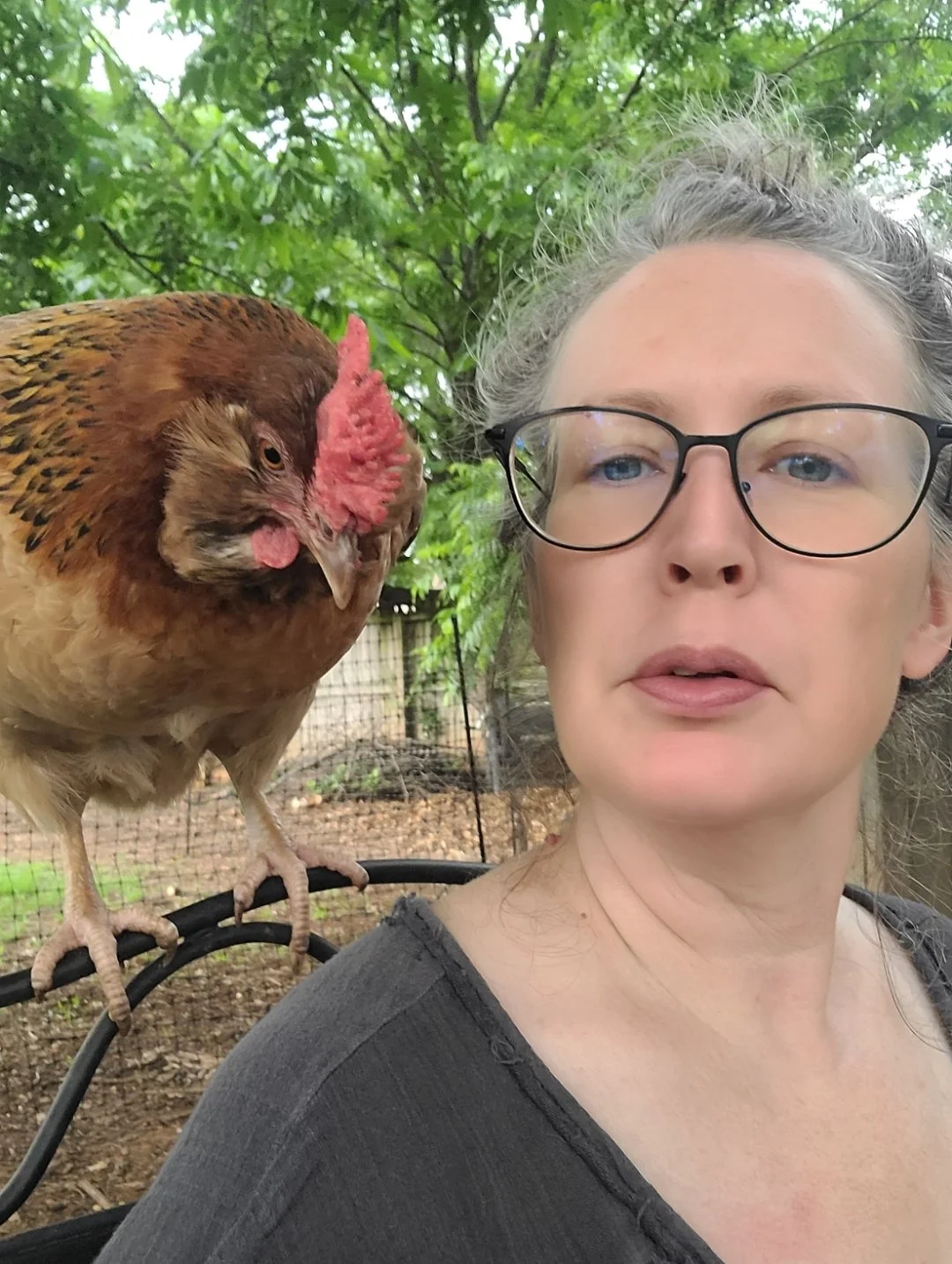
Frigg on the left in the first two with her sister, Skaði. Frigg all grown up and broody. Frigg telling me all about it.
[1] My co-writer, Alana, and I wrote a lovely dialogue about growing up tomboys and embracing our femininity.
[2] I’m sure this was further compounded by our infertility. Conservative and Protestant circles need to do a better job valuing motherless and single women without just telling them to go get a job. We need to do the same with our empty nesters. There is so much more we women can do, we who don’t have husbands and children, than what we’re told.
[3] This is an excellent article that bullets out the difference between men and women, showing how they complement one another, not compete.
[4] I fear many of our young husbands enter marriage not knowing what women are either and just expect them to act like they and their buddies do. We’ve lost the respect men used to show women by treating them as other than themselves.
[5] This is one of the dangers of deciding as Protestants to give ground before the ‘witch’ culture. Since witches like long black dresses, feathers, fur, bones, stones, moon, stars, and sun, we’ll just pretend God didn’t make those so that we’re not mistaken for witches, thus robbing many women of their fundamental feminine expression. Not all women want to wear a business suit or even a Little House on the Prairie look. Some of us are more earthy and feral than that. That’s not wrong. We have every right to enjoy God’s creation regardless of how others misuse it.
[7] Real horror is all the “what ifs” that pile on. Real horror is knowing you could have ended her suffering much earlier if you had just made different choices. Real horror is realizing that while Freya’s death was hard because it was the first, it was easier because it was much less violent.

Join our community! Click here.
Visit Vulgaris Media or find our book on Amazon.

Thank you for the wonderful editing, Sarah!