The Oddity of the Inner Life of the Author: Behaving Normally
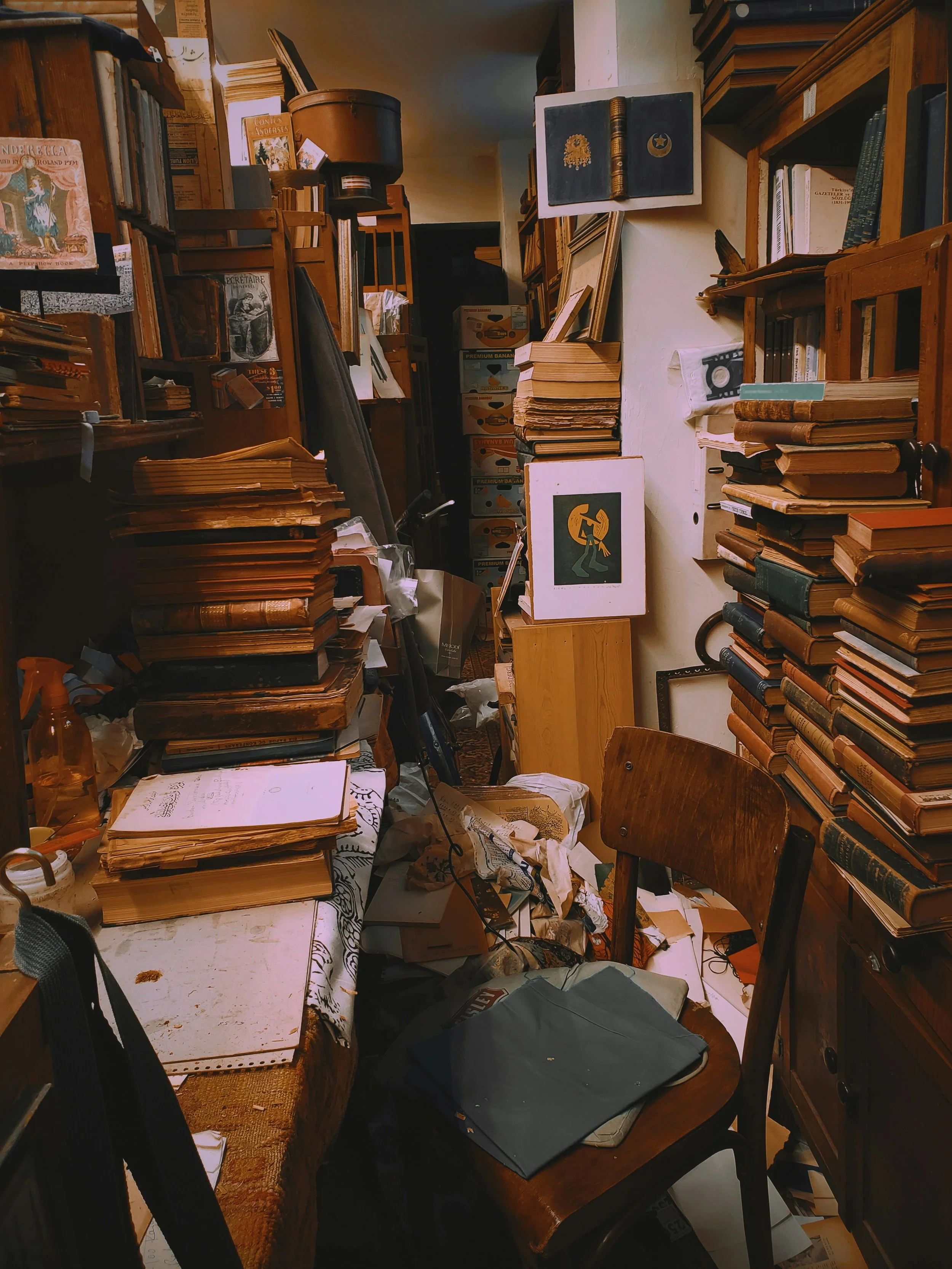
Photo by Samet Kurtkus on Unsplash
“Oh great, how am I going to act like I’m a normal person?”
This was my main concern after a fantastic writing session. My brain buzzed with Wizard Prison. Parth was coming into his own, standing up, brawling, getting braver and stronger with each horror I threw at him. Kaizoku’s humor was holding strong and leaving me in stitches. Ross was finding himself, his forgiven self, to be a good man. Jael was holding them all together with beauty and love, with the help of a baby dragon and a chicken. My villain was SLOWLY sorting himself out, finding his motivation, his crew, his backstory. Things were clicking into place. Click. Click. Click. And now I had to stop, close the keyboard, tidy the house, tend my husband and chickens, and then get gussied up for Book Club. I had to go act like I was normal.
What about me was not normal? Well, like everyone else, everything and nothing. But specifically at that moment, I was assuming, safely I think, that no other woman at Book Club had a loud, violent man in their head who was leading a thief adopted by a dragon, ex-slaver, betrayed cop, and a chicken around a magical world on a swashbuckling adventure. Like I said, safe assumption. The challenge to my normalcy was keeping clamoring characters internalized.
I have been telling myself stories for forty years now. I started daydreaming actual stories when I was 6 years old. I still remember the night I climbed out of bed to ask my mom if it was okay if I told myself stories before I fell asleep. Armed with her permission, I’ve never stopped. (Yes, who I am is my mother’s fault.) I don’t often tell myself stories before I fall asleep anymore, because I…well…fall asleep. But I often have a story rumbling around in my head while I do dishes, clean, garden, even work if what I’m doing is mindless. Some are plots that I’ve used a hundred times, some are fixing stories that were ruined by their writers, and some are probably akin to fanfiction (playing with my favorite fictional characters).
Much of my daydreaming is me playtesting names and characters for the books I’m actually writing. I take my main characters and put them in different situations and settings to see what they do. (Yes, it is like playing with paper dolls in my head.) Therefore, my brain is a crowded place at any given moment. The voices in my head can be insistent, noisy, emotional, and distracting. This is even worse when a story, written or just dreamed, is really flowing. When the muse is pouring through me, it is hard to step away. I have to keep a notebook near at hand after a good writing session because the story just keeps coming. On that particular morning, I didn’t want to leave even though I was looking forward to the day. My head was thrumming with thaumaturgy. My heart was thrumming with thaumaturgy. I wanted to call Alana and scream with delight, then pour a cup of coffee, and spill the beans on the whole story, pointing out this, and this, and that, and look how that came together, and isn’t Parth so much fun, and look at how Jael is growing, and did you see what I did there?
Side Note: This is absolutely one of the best parts about co-writing. We are each other’s built-in readers. No more trying to hold back the flood of excitement when the story is blossoming, or at least no more having to hold it in for years.
Instead of calling Alana, I started the day and tried to quiet everyone down until the next writing session without quieting them too much because I love having them in my head, and another writing session is coming soon. I tried to switch from swashbuckling adventure with a bit of horror thrown in to dresses and little pretty things. Talk about discombobulating. Trying to get Parth and his crew to sit down and shut up, or at least whisper, so I could go talk about books and families and normal things felt impossible. “I’m sorry, I have a man in my head who is facing monsters, torture, and the death of his friends if he doesn’t pull this off; what was your question again?”
Now, you may be asking why not share the voices in your head with your friends?
Three reasons. First, an oddity of the author is sharing. Sharing has to be managed with extreme caution. If I share my excitement about my shiny new story too early, I’ll lose my enthusiasm. The story has been told; let’s move on. One can absolutely spill over with enthusiasm and lose everything. I don’t often share my story ideas until I’m certain there is no way this story isn’t getting written. I have to develop a certain rapport with the characters before I share them with the world or else they will disappear. Granted, Wizard Prison is safe to share at this point. Parth and I have an excellent affinity, and the worldbuilding is developed enough that I’m starting to feel like it’s second nature; it’s becoming and doors of the home instead of the décor – things in our homes we don’t notice, but move through without a thought. But even with Wizard Prison’s 200,000+ word solidity, I still hesitated to share my enthusiasm for fear of losing it. I’m always asking myself if it is too early to share an unpublished story with others.
Second, most non-authors don’t know how to respond to an author gushing about their characters and their books. It’s similar to someone gushing about their new favorite TV show, but you’ve never seen it, and you won’t be able to see it for several years. What are they going to do? Nod and smile. Oversharing about an unpublished story puts the listener in an even more awkward situation than oversharing about a published story, especially if they aren’t an author. I didn’t want to do that to any of my friends. It just wasn’t appropriate for the situation. But it did leave me feeling not fully present because Parth was just waiting for me to get back, fists tight around his brass knuckles.
And that leads me to the third, personal reason I struggled with feeling normal that morning, and struggle at most female-centric gatherings. I believe in being feminine, and I believe being feminine is different than being masculine, and that is a good thing and not a competition. I’m thankful and happy to be a woman. But I also write mostly male characters who have violent tendencies. The first character to talk to me was Crow. He was a foul-mouthed, angry man who hunted serial killers. I adore him to this day. The next big character to live in my brain was Ronan. He was less dark than Crow but had a terrible power – he held the souls of people being tortured to death. After him came Jonah, an adopted boy prone to getting into fights who has to learn to fight for good. Then came Will, my huntsman who had lost why he hunted the things that go bump in the night, until a bit of magic tethered him emotionally to Dún. This forced him to remember that when he battled monsters, he stood between them and the innocent. Then came Sul, a heartless bountyhunter, and you can read about him in Stoneheart. In case you’re missing it, I write about warriors. When I say that, I often get a strange look from other women. Thankfully, I also get a lot of love and have found many warrior-loving women along the way, and plenty of women who accept me despite my love of men who are skilled and trained in violence. Despite my 20+ something years of writing about warriors, reading about warriors, and watching warrior-oriented shows and movies, I still hesitate to share that with women, especially women I’m meeting for the first time (we had a new member at Book Club that day), because I know there is a bigger chance of them thinking that I’m odd than connecting. It’s like this; ask any woman what her favorite movie or show is? How many do you think are going to tell you Band of Brothers and Rambo 4. I’ll go play with my chickens while you take a poll.
Parth is a different take on the warrior; one I haven’t done before. He’s not the broken warrior needing healing or redemption; he’s the oblivious warrior who gets smacked upside the head one day with his warrior-ness. (He’s so much fun!) He feels fresh and new and at the same time comfortable. I love him so. Plus, there is something special about his friendship with Kaizoku that has me absolutely in love with them…I’m doing it. I’m gushing about Wizard Prison. My characters are loud, alive, vibrant; my story is flowing out of me faster than I can keep up. I am 100% in love with the thaumaturgical world we’ve created. I told Alana that I think I could write in this world for the rest of my life. We have so much room. I feel like the little girl I once was who moved from Los Angeles, CA, to Yellville, AR; from stifling suburbia to my grandma’s 80 acres on an old dirt road. There’s room to breathe. I’m constantly thinking about directions we could go, things we could explore. All I need is a good crew, a good ship, and a star to sail her by.
Then my writing time is up, I lift my head from the keyboard and find…the normal world. No thaumaturgy, no stained glass, no hudlaths, no Parth with his rough voice and brass knuckles, or Kaizoku, Jael, Ross, Tōzoku, or Skađi. Just me trying to come back to reality. That is why I started that particular Saturday feeling just a bit divided. I wanted to go be with this group of women I love, and I wanted to stay in my imaginary world playing with my imaginary friends. How am I supposed to be normal?
Being an author is an odd thing.
(Since writing this article, Alana and I have agreed to shelve Wizard Prison. I have no less love for it, but not all stories, even the ones we adore, are publishable. We have moved onto other tales and are both excited about our new story. For the foreseeable future, Wizard Prison will remain my story that I told myself and a handful of others. I’m thankful to have had the time that I did with it. Now, off to my wood and bog!)
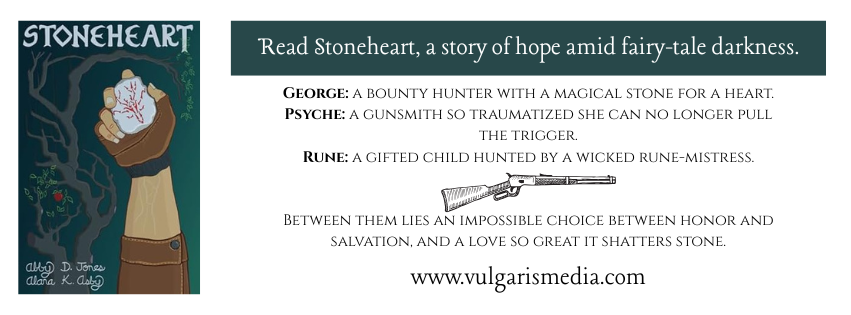
While we all wait for Wizard Prison to be finished, may I suggest checking out our debut novel? It is, shockingly, set in the winter.
Thank you, as always, for the edits!