The Oddity of the Inner Life of the Author: Dark and Cozy
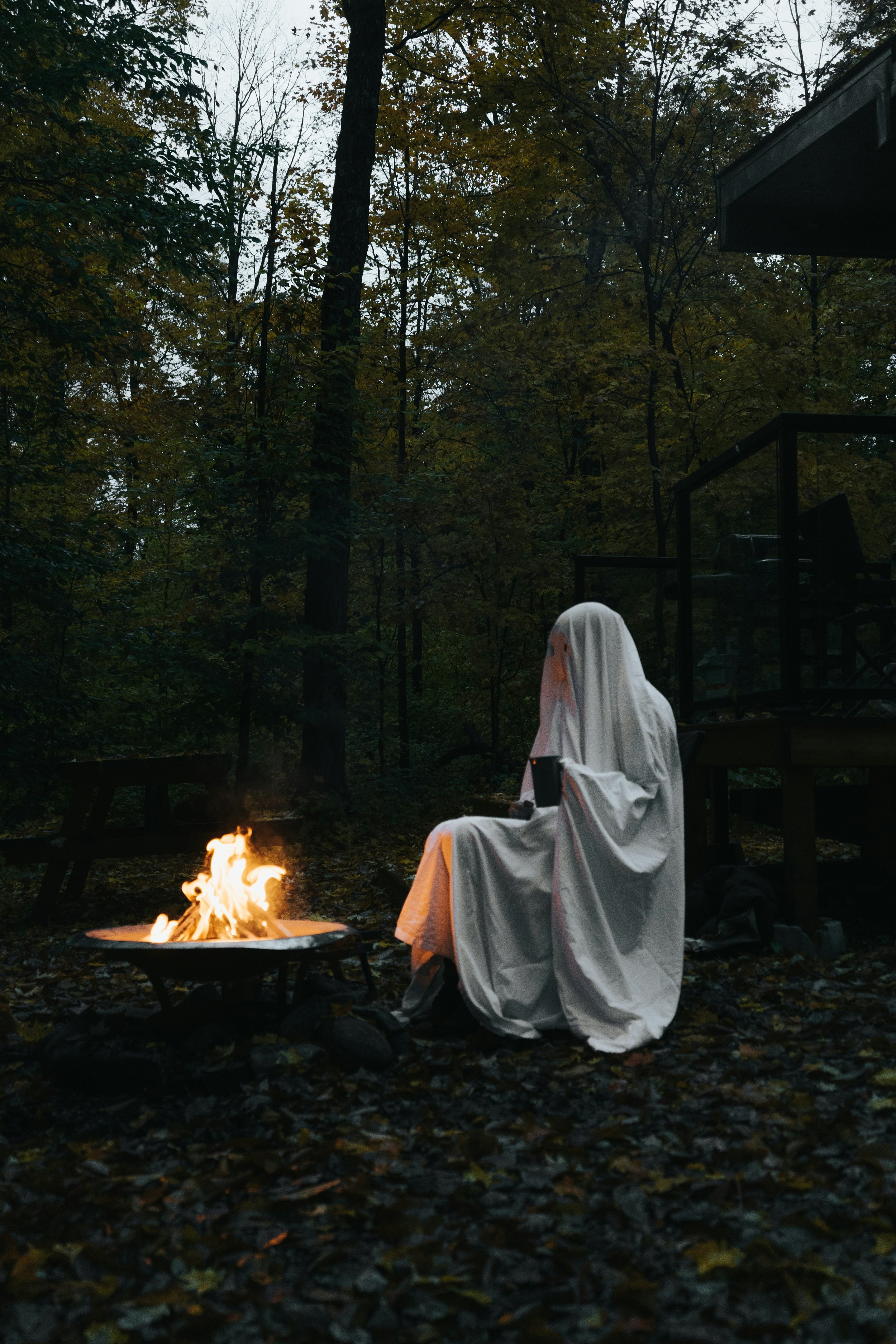
Photo by Alexa Portoraro on Unsplash
As Alana and I explore the publishing world (mostly her) seeking to get Stoneheart to the right reader, I’ve had to laugh and shake my head at myself yet again. I have this instinctive feeling that we’ve written a book that is too dark for the “clean” fantasy reader. There’s murder of children, rape, bounty hunters who take heads and fingers to prove they got the right guy, mass graves, cannibalism, a hint of necrophilia, (I’m really laughing now—how in the world would I ever justify this book as “clean”?) and more. But I’m afraid it’s too “clean” for the dark fantasy reader because none of the things are graphically displayed or deeply explored. There are no sex scenes. We don’t have gore for the sake of gore at any point. All the violence in Stoneheart has a point, just like any foul language use. The trouble with Stoneheart is that it isn’t safe, but it’s also not grim. (I’ve talked about that here.)
Part of the issue is that I personally have this inner dichotomy (my mom lovingly refers to it as my alter-ego) between dark and cozy. It’s difficult to find fantasy novels that are dark and cozy, clean and violent, so I write them myself. I truly write what I want to read but can’t exactly find. If you know me through my homemaking side, you’re going to be familiar with the cozy-Abby. If you know me through the military history side (it used to be true crime, but I’ve moved away from that, but that’s a whole other article), you’re going to be familiar with the dark-Abby who loves Fury, Hamburger Hill, thought Matterhorn by Karl Marlantes was her best read in 2025, and owns an ever-growing collection of war memoirs. Dark-Abby isn’t turned away by violence, grit, cussing, or the realities of battle, both physically and psychologically, even when they turn her stomach a bit. That is a necessary price to pay to honor the sacrifices made.
But dark + cozy Abby? What is that? Why is that?
In my fantasy writing, I get to combine myself into one whole.[1] I’m no longer studying how to make a house a home over here and reading about Easy Company at Bastogne over there. (They didn’t need to be rescued.) I’m pulling both sides together in Stoneheart about a cold-hearted bountyhunter finding his way to the cozy cottage of the woman he saved in. But what is it that I love about bringing these two sides together?
Juxtaposition: I love the contrast between them. I love moving from Sul unemotionally turning a mass grave into a trap and filling it with more bodies, to Psyche baking, painting her kitchen, raising her daughter, canning, and slowly becoming part of her community in Stoneheart. I love the horror, fear, and brutality contrasted against warmth, love, and the ordinary needs of life. Mass graves and monster attacks should always be followed up by soup, chocolate, and coffee. The contrast deepens both. The violence is more shocking for the warmth it destroys. Home is sweeter because the darkness is deeper.
Healing: I love the power of all that is a cozy home to heal all that is savage. We can’t avoid the darkness of life. Life is brutal, dark, and short much of the time. Wars come more often than peace. People who are supposed to love each other abuse one another. Even nature is violent. There isn’t much safety to be had in this world. Our stories should reflect this, but they can also bring healing. My favorite way to heal wounds is by creating homes for my characters, just like it is my favorite way in real life. Tolkien followed up the Balrog and Gandalf’s death with Lothlorien. The battle of Pelennor Fields had to be followed by the Houses of Healing. Pippin and Merry are taken to Wellinghall after their escape from the orcs. Aggression and cruelty are healed by home. And homes are powerful because they’re filled with comfort—cheering strength. So if I’m going to take my characters down dark paths that wound them, I need to bring them home for healing. If a reader can’t find this healing in real life, let them find a taste of it in our books.
Male and Female: I tend to read books and stories written in a masculine voice. I tend to write in a masculine voice. I tend to read masculine genres and subjects. As I’ve matured through life, I’ve purposely tried to better understand and tap into my femininity. I don’t struggle with loving men, respecting them, seeing what they bring to the table, and honoring what they do. I do struggle with loving women, respecting them, seeing what they bring to the table, and honoring what they do. Why is this? I’m still exploring the answer to that question, but I believe it is because women in our stories seem to be foolish, promiscuous, and or aggressive. Women in our stories spout lies about everything. They’re hard and cold, manipulative and mean. They lack courage and discretion. They’re grating. I don’t like foolish women, and I don’t like warrior women, so I often turn to masculine stories. (They’re a break from the drama, drama, drama—I wanted to die watching most of The Crown and found The Lost Kingdom oddly calming, centering, and inspiring.) As I’ve learned what it really means to be a woman, both our strengths and our weaknesses, I’ve learned to respect the gift of femininity I’ve been given and the femininity of other women. Men and women weren’t designed to be in conflict and competition. We were meant to complement one another and depend on each other. Writing dark + cozy allows me to be more balanced, to write a complete whole where my men are strong and my women are strong but in different ways.
In Stoneheart, Sul is a bountyhunter, and Psyche is a gunsmith. Sul is out hunting down people while Psyche is home in her cottage, hoping he’ll find his way back to her someday. Has Psyche been banished to the kitchen because she’s not fit for anything? Actually no. Her life in Hope-for-Spring, with her daughter, with the Crickets, is fuller and more vibrant than Sul’s. Is Volo Pine, our evil witch, living a fuller life with her parties and her fancy dresses? No, she’s wasting away and destroying her soul. Psyche is the one growing, loving, and connected with those around her in a way that saves everyone in the end.
My fantasy writing not only allows me to bring the two sides of myself together, but it also allows me to bring men and women back together, united, dependent, and helping each other. I write dark fantasy. I will always write dark fantasy. I have read and studied too many dark things for darkness not to come out. If you let me have my head, people are going to die, be tortured, and suffer. But I will always root my characters in a home, and I will always have a woman at the heart of that home calmly healing, tending, and making things cozy. Always. I will never do one without the other because, from Tolkien to Firefly to Stargate: Atlantis, the stories I love never have adventures without having a rooted hearth and a good hearth-keeper to tend it. The home at their back makes them stronger. So it is in my stories.
Alana and my search for male and female readers who are also longing for something dangerous and something comforting continues. We’re looking for readers who want something clean (no porn, no exaltation of wrong) but not safe. We know our readers are out there, but it can take time to find them and be found by them. In the meantime, I carry on with my dark + cozy magical stories.
[1] This isn’t a situation of hypocrisy or dishonesty. I want the violence in my military history to stay in the books, not be hung on the wall. I want those who are more tender or easily harmed by violence to be able to be safe in my homemaker group. It isn’t inauthentic to know when it is appropriate to discuss different topics or share different parts of ourselves. No one around me for more than three seconds will be in doubt of my love of home, modern military history (boots-on-the-ground), reading, writing, Tolkien, Lewis, trees, and chickens. But there is a time and place for things, and that doesn’t make a person inauthentic.
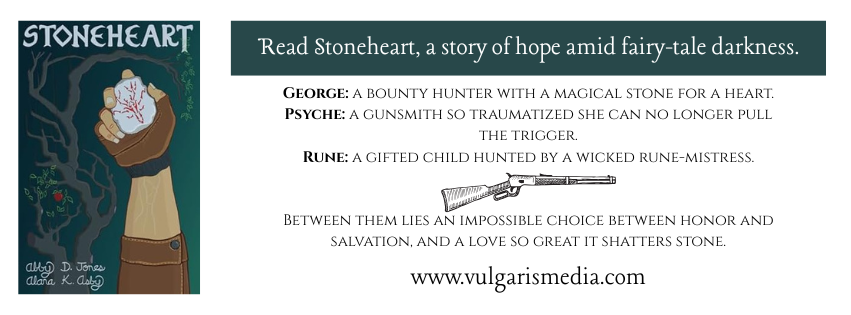
While we all wait for Wizard Prison to be finished, may I suggest checking out our debut novel? It is, shockingly, set in the winter.
Thank you, as always, for the edits!