Beth Morgan and Sunshine
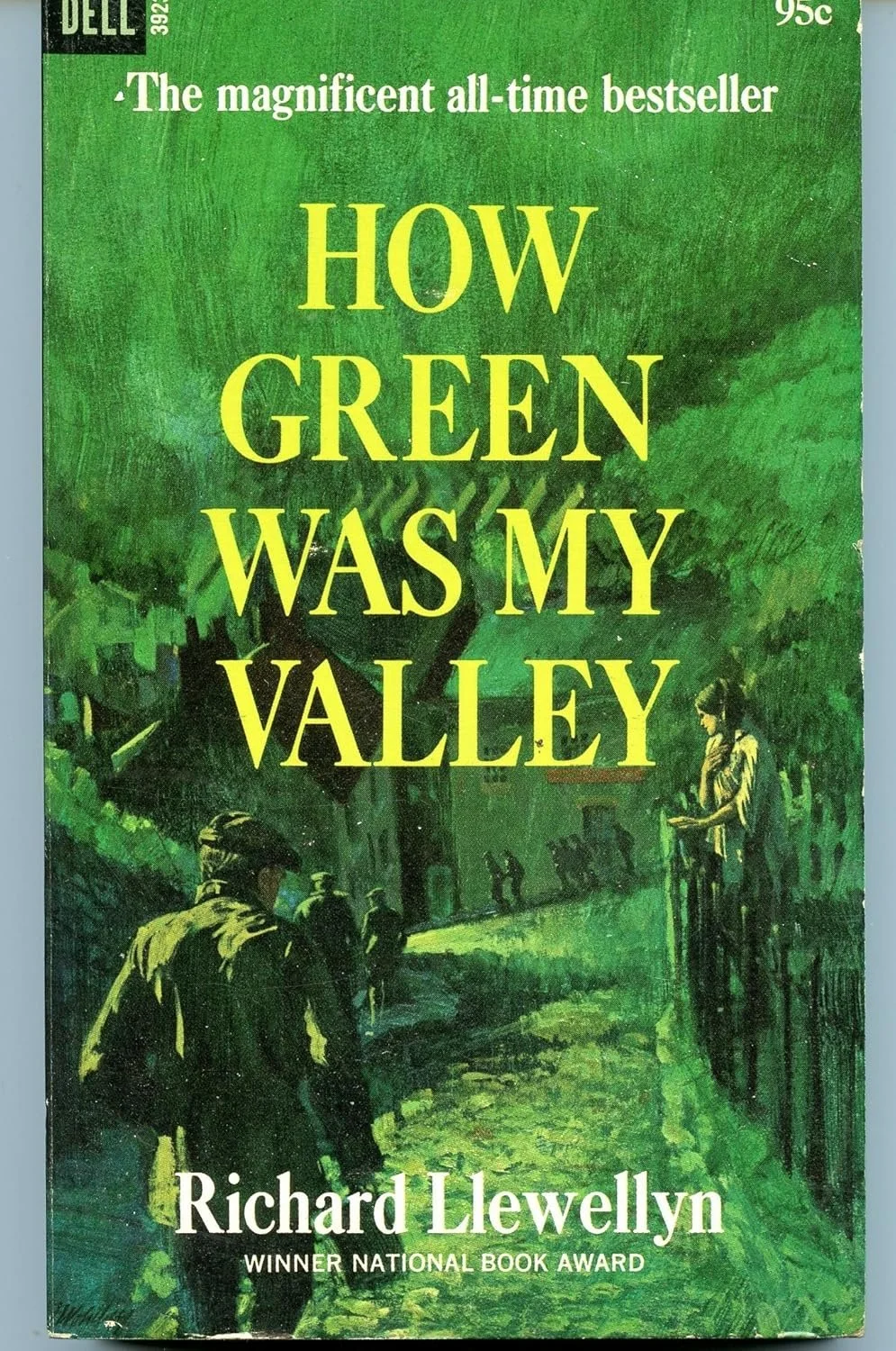
Beth Morgan from How Green Was My Valley by Richard Llewellyn
I waited way too long to write this article. I should have written it right after I finished this book, when my brain was on fire with the story, the characters, the place, the beautiful mixture of love, happiness, nature, sorrow, and horror that is life in a coal mining community during the 1800s. Not only is this book lyrically written, it is also filled with some of the most delicious domestic metaphors and analogies that I’ve ever read. This book will fill you up with love of hearth and home, kith and kin, and in the center of all that is a homemaker beyond all homemakers—Beth Morgan.
Beth Morgan is the matron of the Morgan family, an influential and hardworking group in their community. She has three girls and five boys (I think I got that right). Throughout the story, she makes a home for her children, new daughters-in-law, and a son who is bedridden for years, all while welcoming in her neighbors and pastor. On any given night, she seems to feed and shelter the entire community. She manages the family income. She tends the poor. She holds her sons and daughters to a high standard of behavior. She is incredible in every way. All this from a woman who doesn’t know what a decimal point is or where Australia is. Beth Morgan has very little formal education—one of the funniest moments in the book is when she is told about a math problem involving a leaky tub and gallons of water—yet she is thrifty without being miserly, an excellent cook, an engaged wife and mother, and held in high regard throughout her community.
“How quiet is the house when the mistress has gone.
You walk in, and the same smell is a comfort to you, the air on your cheek has the same feel, the fire makes the same noise, the china plates on the dresser shelves laugh at you as they always did, and the clock is still as loud as he always was with his heels on the road of Time.
But a warmness is missing, a briskness, that moved as soon as the latch was lifted, and those sounds that followed, the rattle of the teacaddy, the crunch of the lid, the chime of spoons in saucers, the poking of the fire, and the hot hurry of scalding water upon tea leaves, are gone, too.”
“But again I felt the foolish newness busy within me and I went from there, and did the work of two among the teapots, and helped with the little, pleasant kindnesses that my mother was busy to do of cutting bread and butter and spreading milk cheese, for old ladies with few teeth, and putting a hot poker with honey in the home-brewed beer, for Old Mr. Jones, who wanted to sing but felt the cold, yet could not be pushed to go to his bed.”
“Dear little house that I have lived in, there is happiness you have seen, even before I was born. In you is my life, and all the people I have loved are a part of you, so to go out of you, and leave you, is to leave myself.”
These are just a few of the quotes describing the home which Beth Morgan created, built, tended, and managed.
Reading about her domestic life can feel a bit overwhelming. I felt ashamed of how little I accomplish in one day, even of how easily fatigued I get. But one of the things I had to remind myself of was the community in which she functioned. Until her sons could go work in the mines, they worked in the home. All three of her girls worked with her, and sometimes her daughters-in-law as well. Having two, three, or four women engaged in the task of managing the home with no electricity, modern plumbing, dishwashers, microwaves, stoves, or a local Walmart makes more sense than one woman on her own. It took a family that large all being engaged to tend to a family that large. When the Morgans opened their home to practically all their neighbors, all their neighbors pitched in. Everyone brought something. When one of the families ends up in a hovel just as the mother is giving birth, it is discussed how hard it is because they’re at the stage of life where only the father can bring in an income, and the girls are too little to help much. Beth helps the family by making their needs known to the broader community and then coming and helping herself.
When you read a book like this, you begin to sense how isolated we all are in our own little homes. I don’t typically need help with dishes and laundry. I have machines to do that for me—and I’m very thankful for them—but each convenience has, in a way, cut us off from others. The doors of our homes aren’t often open; they’re closed. We don’t need quilting bees to finish the quilts before winter. We don’t need canning and harvest time to stock our pantries. Our sons and daughters are often at school all day. They neither see nor engage in domestic duties. It’s funny how the challenge of all that manual labor forced everyone to have a more narrow view of life. All you could do was deal with the work in front of you. But it also gave them richer, fuller lives, because you were dependent upon your neighbors to get the work done. It’s much like when you read about the whole town singing together. They didn’t have TVs. In a way, TVs have isolated us. I don’t reach out to my neighbor in the evening to wind down; I watch TV. This book really brought to the forefront of my mind why community is such a subject of conversation within the homemaker circle. This book showed me what we’ve lost. It made the possible richness of community tangible in a way that made mine, which I’ve always considered healthy and thriving, pale in comparison.
Side Note: No, I’m not getting rid of my television nor inviting people to just drop by at any given time. I’m just observing how things have changed, and things touted as time-saving and life-changing always cost us something else.
Read this book at your own risk. It is haunting, sad, moving, and might just make you wrestle with what we’ve lost and what we’ve gained in our modern era.
Finally, one of the things I loved the most was that everyone knew their roles and were content in them. We’ve heard how terrible the idea is of women’s work and men’s work, how it is used in a derogatory manner or as an excuse for laziness. But I’ve always suspected there might be some wisdom in culturally communicating the boundaries of the roles and work of men and the roles and work of women. I’ve just never been able to put it into words. This book didn’t put it into words – it put it into music, poetry, and life. It showed how those boundaries worked and worked like a perfect dance. The women exulted in knowing exactly what their realm to rule was, and many of them, like Beth Morgan, ruled with such wisdom and diligence that they serve as an example on the level of the Proverbs 31 woman—both giving cheering strength and a healthy dose of self-examination, guilt, and mortification. The homemakers take pride in the order, cleanliness, neatness, and nourishment of their families, but they were also praised or shamed for these things. They know and pass down a very high standard of homemaking.
At the same time, there isn’t a single woman in this story complaining about the drudgery of homemaking and how unfair it is that they can’t go work in the mines. The women trust their men and leave them to their work while keeping a close eye on their own endeavors. Do you know how refreshing it is to my soul to read a book where women aren’t competing with men in a mean, ugly, and demeaning way, but loving them, helping them, and being absolute powerhouses in their own homes? The other side of this that was interesting to me is that the boys are raised in this domestic environment as part of the labor force in the home. Several times throughout the book, the boys are home when Beth is gone, and they have to do the work of dinner, dishes, and all the little things, and they do. Huw is constantly conscripted to wash dishes. The boys are raised to know what good homemaking looks like to such a point that when Huw goes to his sister-in-law’s house, he can see nothing has been done all day. He rolls up his sleeves and does it.
Women’s work wasn’t used as a derogatory put-down. It was honored and necessary. It was understood. The men knew exactly how much work went into managing a home and family and how important finding a good wife to do all that was. It wasn’t that they didn’t know or care; their lives and the happiness therein depended upon the homemaker’s labors. This book showcased what I’ve always imagined a healthy view of men’s work and women’s work would look like.
As HearthKeepers, I can’t recommend this book enough. No, the homemaker isn’t front and center. She’s not the main character. She is in the background creating a home, day in and day out, exactly like all of us. If you want to be inspired, challenged, and maybe a tiny bit rebuked, read How Green Was My Valley by Richard Llewellyn. It will be good for your soul and good for your home.
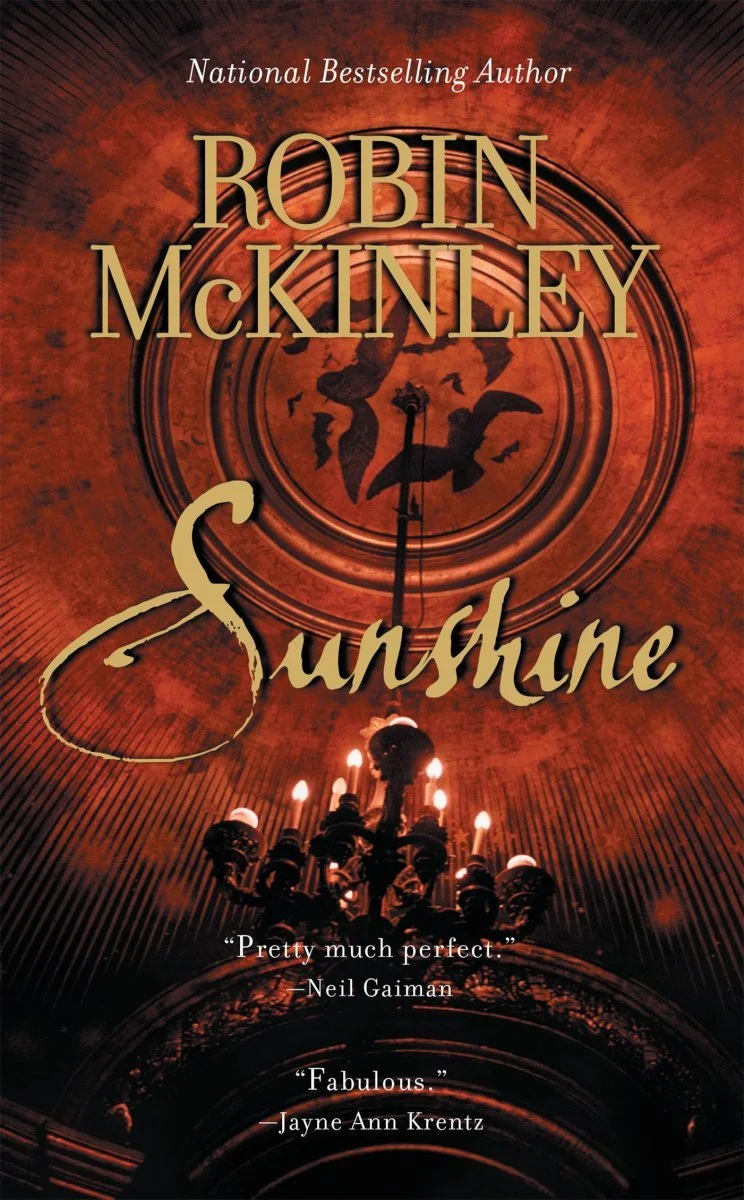
Sunshine by Robin McKinley
I asked myself what I wanted to read for my day off. I'm attempting to make this a year I slow down my reading and read more studiously, but I’ve found myself craving the escape of a well-written novel enjoyed for sheer enjoyment, no strings of annotation or deeper diving attached. Myself responded with Sunshine. Okay, that was unexpected. I haven’t read Sunshine in a bit, and it sort of lives in my mind as one of the few trash-fiction books I own. I knew I was tired—it was the end of a long week and the lull before another busy week—so I gave in, ignored the many books I’m currently working through, ignored the many books in my TBR pile, and grabbed it off the shelf. I started it late Sunday afternoon. It was odd that I wanted to read Sunshine, odder still that I read it instead of doing my usual TV-watching decompression, and even odder-odder that I read it for about an hour in bed before going to sleep. I had no desire to watch TV (very weird for me); I just wanted to read. And I found it so peaceful. No bright lights, loud noises, or people talking. Just me and the quiet of my book. Have I just made the switch from TV at night to reading at night??? I’ve wanted to read more in the evening and become less attached to my phone. I may have found one more way to actually do that.
We shall see how this develops.
And Sunshine itself? Well, as much as I still put it in the trash-fiction pile, it is a Robin McKinley. Which means it is not trash. It is well written, beautifully written. It continues to be one of the few 1st person point-of-view books that doesn’t end up grating on my nerves. Sunshine’s head is like being stuck in a woman’s head in a good way, meaning yes, that is what it’s like in my brain, but she’s also an interesting character in an interesting situation, even when she’s not dealing with vampires and magic. And McKinley pokes so much fun at the whole vampire trope world while also writing a vampire trope novel. It’s glorious. It’s much like mocking Twilight while writing a Twilight-esque book that turns out to be much better than the whole Twilight series. (I know that’s not much of a challenge, but McKinley does it with flying colors.) I remembered why this was the vampire book of my goth era. It is well-written, fun, engaging, the characters are wonderful, and the world-building is fantastic. (There is also a part of me that loves that McKinley didn’t write a series or any other book in this world. I want more of it, but she is content to let this book be all that we get, which makes it more special.)
But now I’m not in my goth era, so what is it that I find attractive? The sheer domesticity of the book. Holy cow. You could gain two hundred pounds reading this book. This book centers around a family-run coffee shop where they make everything from scratch. The amount of love poured into baking and cooking and family by this book is inspiring, honest, and tasty. This is a family engaged in hospitality, who builds a community, albeit a strange one, and then sticks together when the going gets tough. Sunshine isn’t some warrior woman; she’s a baker, and that is all she wants to be. She just wants to be the Cinnamon Roll Queen at Charlie’s. It is such a blessing to read about a woman who isn’t an ambitious, cutthroat, cold-hearted ladder-climber. It also elevated baking to the magical level it is. I think this book is when I decided to become a feeder. Reading it again, I was reminded that I love the heart of a feeder. If you come into my home, you’re getting fed. I want to get back to that. I love the hospitality of this book and the melding of blood-family and found-family.
So if you’re looking for a cozy fantasy/vampire story, this needs to go on your TBR pile. If you want something that sucks you in, holds your attention, and provides a few hours of escapism, but is still well-written, this needs to go on your TBR pile. And if you need some encouragement to get in the kitchen and start baking and, from that baking, to bless others, this needs to go on your TBR pile.
Probably not what anyone was expecting out of a trashy vampire novel.
(Be forewarned, there is a bit of adult content in this book. Not anything like a SJM book, but a bit because she is kind of poking fun at that style of storytelling while also writing that style of story.)

Click on the image to visit our community, our Knitting Circle.
Available on Amazon and directly from the publisher.

Thank you for the wonderful editing, Sarah!