The Girl Who Drank the Moon by Kelly Barnhill
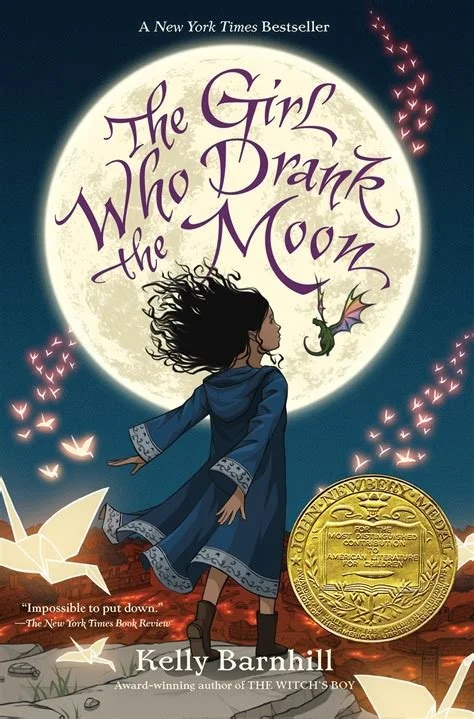
I have a passion for books that have women behaving as women doing women things. I don’t enjoy being in a negative headspace, and I’ve talked many times about how I feel about most feminine characters offered up in our modern stories, so I’m not going to go there. I’m just going to say that this book shows women as women: mothers, grandmothers, aunts, wives, daughters, granddaughters, and homemakers. This is one of the most Maid, Matron, Crone books I’ve ever read. If you need something to inspire you where you’re at in the home, this is my suggestion. It is a children’s book, Middle Grade to Young Adult, but that shouldn’t stop you. Kiddy Lit, as my mom calls it, is often where some of the best stories live. And, if you find yourself short on time or mental bandwidth, this book is perfect. It isn’t going to be challenging; it’s going to be enjoyable and inspiring. Plus, it’s also safe to read or listen to around your children. I highly recommend passing this off to your daughters and talking with them about it. (It does have some paganism in it, but I think that could be a springboard for some great discussions.) If you’re looking to give your daughters some inspiration to be excited to be women, this is the book to use.
Be warned, I did cry… a lot. I cried through the entire ending. They were both happy tears and sad tears, but even the sad tears were happy. This book is about sorrow and hope, and so the ending saw hope fulfilled but not without sorrow, and yet the sorrow wasn’t without hope either.
Xan is such a wonderful character. She’s an old lady who has built a family out of a swamp monster and a tiny dragon. She rescues abandoned children and feeds them starlight before finding them new families. I love her for her love of Luna. Even when Luna makes so many terrible mistakes, Xan’s love shines through. Xan tends so many people. She’s truly astounding. The madwoman broke my heart on every level. Read the book and you will see. Luna was a wonderfully described child filled with magic, who loves her grandmother even when the mistakes she has made hurt her, and who ultimately brings healing to many broken mothers. The women are all excellent examples of the different phases of a woman’s life and all that she can do with her life without leaving home. There are different types of women in this story, all doing different things, but there are no women ugly towards men, no ugly marriages, and no disparaging of motherhood, homemaking, or the tending women do.
But it is Ethyne who made my heart sing.
Grand Elder Gherland wrinkled his nose. “Most housewives, madam,” he said acidly, “would not bother with herbal trifles in their garden when there are mouths to feed and neighbors to look after. Why not grow something more substantial?”
Ethyne was unruffled as she moved about the kitchen. The baby was strapped to her body with a pretty cloth, which she had embroidered herself, no doubt. Everything in the house was clever and beautified. Industrious, creative, and canny. Gherland had seen that combination before, and he did not like it. She poured hot water into two handmade cups stuffed with mint, and sweetened it with honey from her hive outside. Bees and flowers and even singing birds surrounded the house. Gherland shifted uncomfortably. He took his cup of tea and thanked his hostess, though he was certain that he would despise it. He took a sip. The tea, he realized peevishly, was the most delicious thing he had ever drunk.
“Oh, Uncle Gherland,” Ethyne sighed happily, leaning into her sling to kiss the head of her baby. “Surely you know that a productive garden is a well-balanced garden. There are plants that eat the soil and plants that feed the soil. We grow more than we could ever eat, of course, and much is given away. As you know, your nephew is always willing to give of himself to help others.”
In this book, women are honored as housewives and mothers. Over and over, they are described as clever, their homes comfortable and tidy and filled with beautiful touches. And the married women love and are loved. The marriages are happy and good. Motherhood is honored. My heart just sang as I read this book.
In the center of these changes stood Ethyne—all reason and possibility, and a hot cup of tea, with a baby strapped to her chest.
Last quote:
Ethyne transformed the room into a place of healing for both mother and daughter. Soft surfaces. Thick curtains for when the day became unbearable. Pretty flowers in jars. Ethyne prescribed soup and healing herbs. And rest. And endless love. She was fully prepared to provide all of it.
The hope that overcomes sorrow and the love that proves unlimited, able to shelter many, made this book exactly the infusion I needed in this turbulent year. It bolstered my affection for home, reminded me to love my community and family, and showed me true femininity in action. It never once suggested I stop being a tender of my home or that my work here was without value. Quite the opposite. It quietly leaned into the true power and magic of a woman in her home with her family and community.

Click on the image to visit our community, our Knitting Circle.
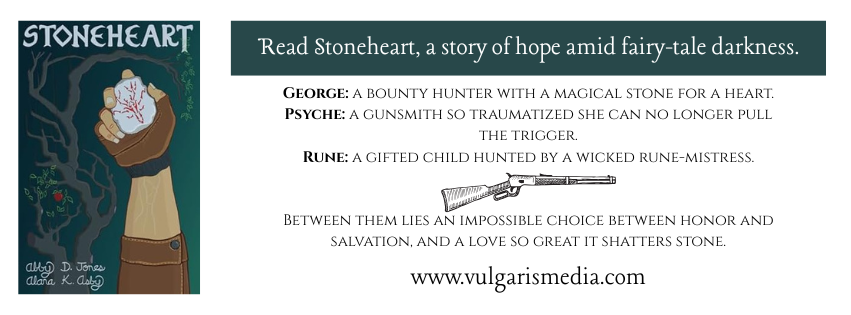
Abby D. Jones’ gritty hearthkeeper book is available on Amazon, directly from the publisher, and as a serial on Substack.

Thank you for the wonderful editing, Sarah!
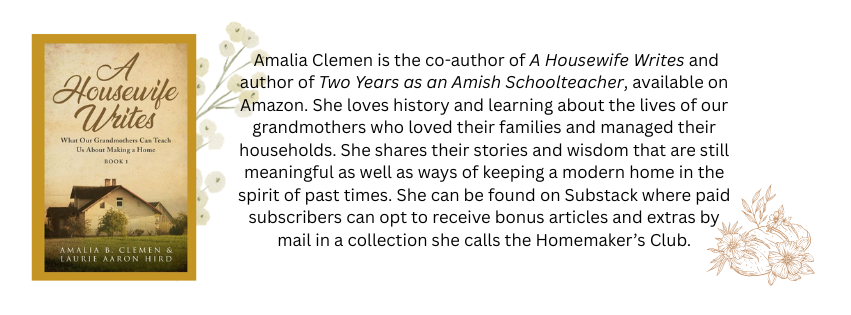
We highly recommend Amalia’s Substack.