Sterile vs. Fruitful:Thoughts from The House of Tom Bombadil and The Ogress and the Orphans
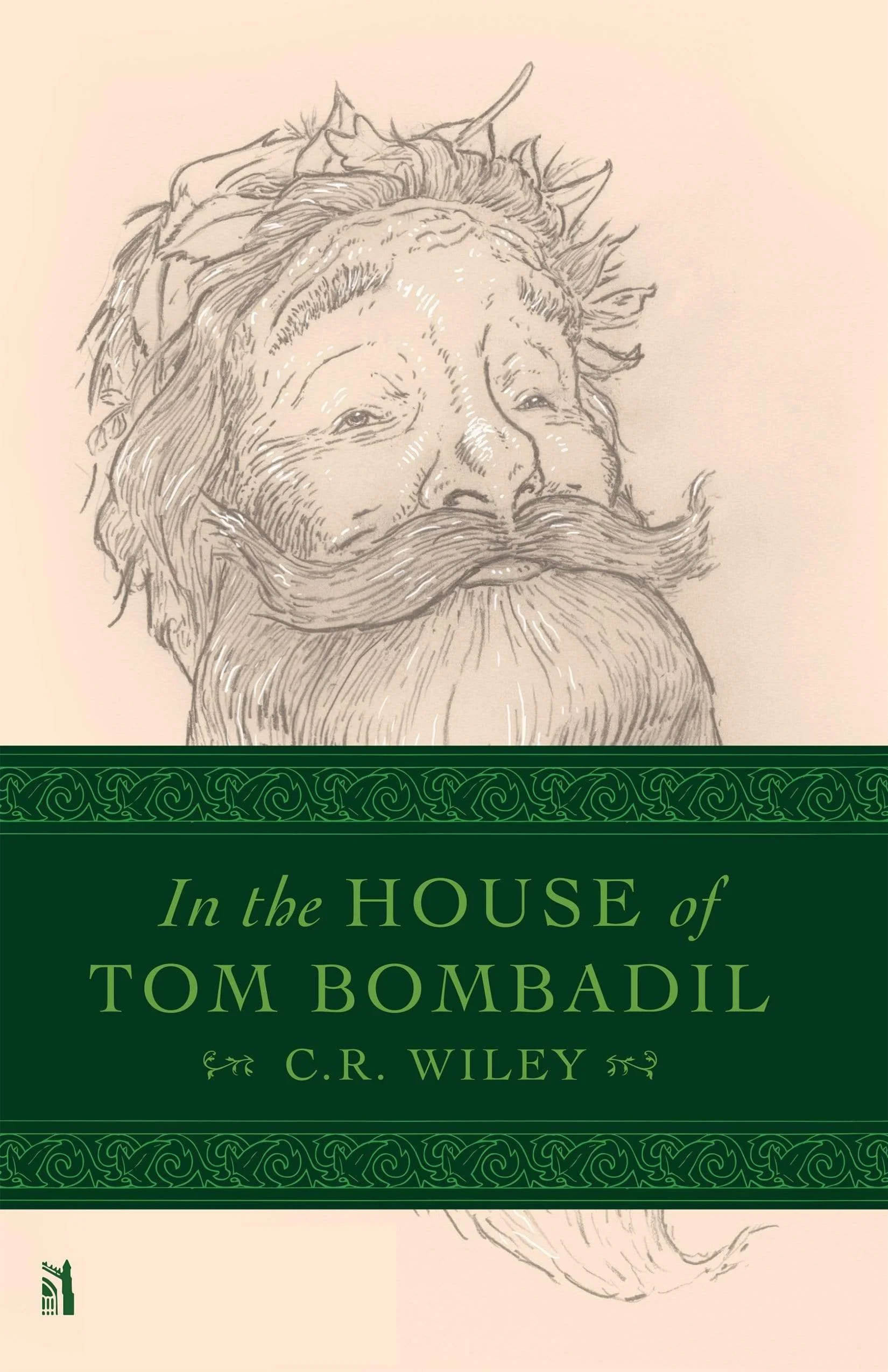
I love how this book can double as a Christmas decoration.
Gardening is in my blood. I get it coming and going from both sides of my family. All my grandparents gardened. Even into their late crone years, my grandmothers have been surrounded by plants. My mom, at her height of homesteading, had four massive gardens that we were all conscripted to weed and harvest. I swore I would never have a garden, but that was foolish immaturity. I don’t have gardens like my mom; I have a lot to learn, but I have fingers in the earth, flowers blooming, and dreams. My nieces and nephews grow things. We talk about the things we grow and inspect each other’s gardens. Earth under our nails, fruitfulness from our labors, little growing things, flowers, herbs, and veggies are just part of being who we are no matter where we are.
Side Note: It is absolutely thrilling to bring in your own cut flowers. 2026 was the first year where most of the flowers in the house this spring were grown by my own hand. Yes, they’re just humble zinnias and cosmos, but they’re mine! I can’t wait to keep adding to my flowers.
I’ve lived in the city for the majority of my life. Our home here in Texas is on a large lot for a city dweller. We don’t have a postage-stamp sized yard. It was pretty intimidating to go from an apartment to this yard because it is so much to maintain. And the previous owners hadn’t cared about flower beds. He’d had a garden in the back at one time, but it had long since returned to grass. And that’s what we did at first, just grew grass with a few pots here and there. As my health has improved, I’ve been able to put more plants in the ground. We decided to try to cut down on the size of our lawn by adding flower beds. It’s been slow going, but I’m learning that’s a big part of gardening and ordinary landscaping. It’s layering every year on what you did last year. As I’ve worked, you know how it is, you start looking at other yards and gardens, and you start reading about yards and gardens. This is when I bumped into the conversation about suburban yard sterility.
How can something so lush and green like my husband’s babied St. Augustine lawn be sterile? Look at all the green!
Look at all the green, manicured lawns. All of them. All over the city. Look at all the lawn crews, busy, busy, busy.
But are these yards alive?
Are they fruitful?
Shocked by this idea, I started contrasting my suburban yard with what we had for those few magical years out in the country in the Ozarks when my mom was a homesteader. Life in the country was busy, rich, full, and heavy. Plants, bugs, and birds abounded. We had bug books in the city that hardly got used once you got done with ants and roaches. When we moved to the country, we used the whole book and saw more unique bugs in one afternoon than we had seen in months of city life. We saw more birds, different kinds of birds, in the country than I ever saw in my childhood city backyard. In my Texas lawn there are no native plants, no flowers, and no bugs (except roaches and wasps, which can’t be killed, we all know this). We put down poisons to make sure nothing but grass will grow and no bugs or weeds will mar its perfection. This is what we do in the city, right? Yes. Yes. All the sage heads nod. This is beauty. Look at our lush green lawns. But what do we really have? Fewer butterflies, moths, birds, and dragonflies.
Much of nature in suburbia isn’t tamed; it’s sterile. Even flowers have to be repotted every year because they’re not reproducing or reseeding. How can they? There are no bugs. Or they fall on fallow, impacted, poisoned ground. I’ve especially noticed a huge lack of ladybugs and bumblebees in my own flowerbeds. Our yards in suburbia are sterile. They are pretty to look at, like a piece of AI art; but there is no fruitfulness…there is no life.
Did you know there is even one school of thought that one of the reasons we all suffer from allergies, here in northern Texas, is because we’ve planted only one sex of our typical suburban trees? That means that when they are ready to produce, their pollen is just floating about, not being utilized by the tree of the opposite sex. Suburbia is sterile.
Yard sterility has been in my mind for several years now. I actually, thanks to my chickens, have places in our yard now where I don’t let our lawn guys put weed and bug control down. I’ve bought native wildflower seeds and used them in my yard. I’ve crowed over buzzing pollinators and some of the most beautiful grasshoppers I’ve ever seen. I’ve grown misty-eyed at a handful of fireflies. I’ve sheltered the one dandelion that came up and threatened to put in a whole flowerbed of them. Why do we despise this wonderful, brave, cheerful flower??? And it’s good for us! We can eat it! We can make wine from it and salad. I want to know who decided it was ugly and should be eradicated so I can punch them in the nose. I’m buying the dried version of an herb that would grow with zero effort on my part in my own backyard. Why? So my lawn can meet the standard of expected city life. That’s why.
So, here is the problem I’ve created for myself. Once you see sterility, you can’t unsee it. In fact, you start to see it more. I struggle in the summer. We all know this. But part of the struggle, a big part of it, is that AC air is sterile. When you step outside, the very air is filled with life. Yes, it’s humid. Yes, it’s hot. But it is alive. AC air is like canned green beans. I suppose that’s a bean, yes. But eat a real bean, one pulled off your own plant. Now that’s a bean! So much of the air we breathe is sterile.
Earlier this year, Sarah read the House of Tom Bombadil by C. R. Wiley. She spoke so highly of it that I had to buy it and read it myself. I’m so glad I did. It was so rich, beautiful, and helpful. It was a book that instantly fed Merry Durability and Cheering Strength. Tom is explored as a man with dominion over nature, who doesn’t dominate. He has parts of his home that are tame and trimmed, and he has parts that are feral and even dangerously wild. He has both. This was an interesting idea to ruminate on. One of the things I most appreciated about the book was the chapter on Goldberry. Goldberry is Tom Bombadil’s wife. She has long been one of my favorite literary women and favorite Tolkien women both. She is only in a few chapters of The Lord of the Rings, but everything about her is so feminine and beautiful and strong and homey. As I was reading the chapter on Goldberry, this paragraph arrested me:
For a man, a house without a wife is a cold and sterile thing. In ages of the world when the wilderness was just beyond the hedge, that was obvious. A man can live alone, but not fruitfully. It’s in the nature of things, for a husband and wife bring a good return. In our time, we’ve lost our sense of the nature of things—particularly the fruitfulness of a home where women and the feminine arts are honored.
I stopped and re-read and re-read that paragraph. Here is a definition of femininity (we know I’m always on a hunt to understand what a woman is away from feminism): fruitfulness. The feminine arts are fruitful arts. As I pondered on that, I felt more and more thrilled by that concept. Far more thrilled than by the idea of production. I instantly wanted to throw that word out of my vocabulary and start looking at my daily fruitfulness. I also found myself on the point of tears because this is said about a childless couple. Yes, the first area a woman is and should be fruitful is in her children. That is a true and great blessing. But it is not given to us all, and all children but one grow up. Here, a childless couple, a childless woman, is described as fruitful. What is Goldberry’s fruitfulness? Her generous hospitality, her beautiful if rustic home opened to four wandering, lost, tired hobbits, and all the food, candles, and bedding she’s able to share. I am still exhilarated by this thought of a woman’s fruitfulness. I’m still contemplating it. (I’m so ready for my The Lord of the Rings re-read this year. I’m chomping at the bit.)
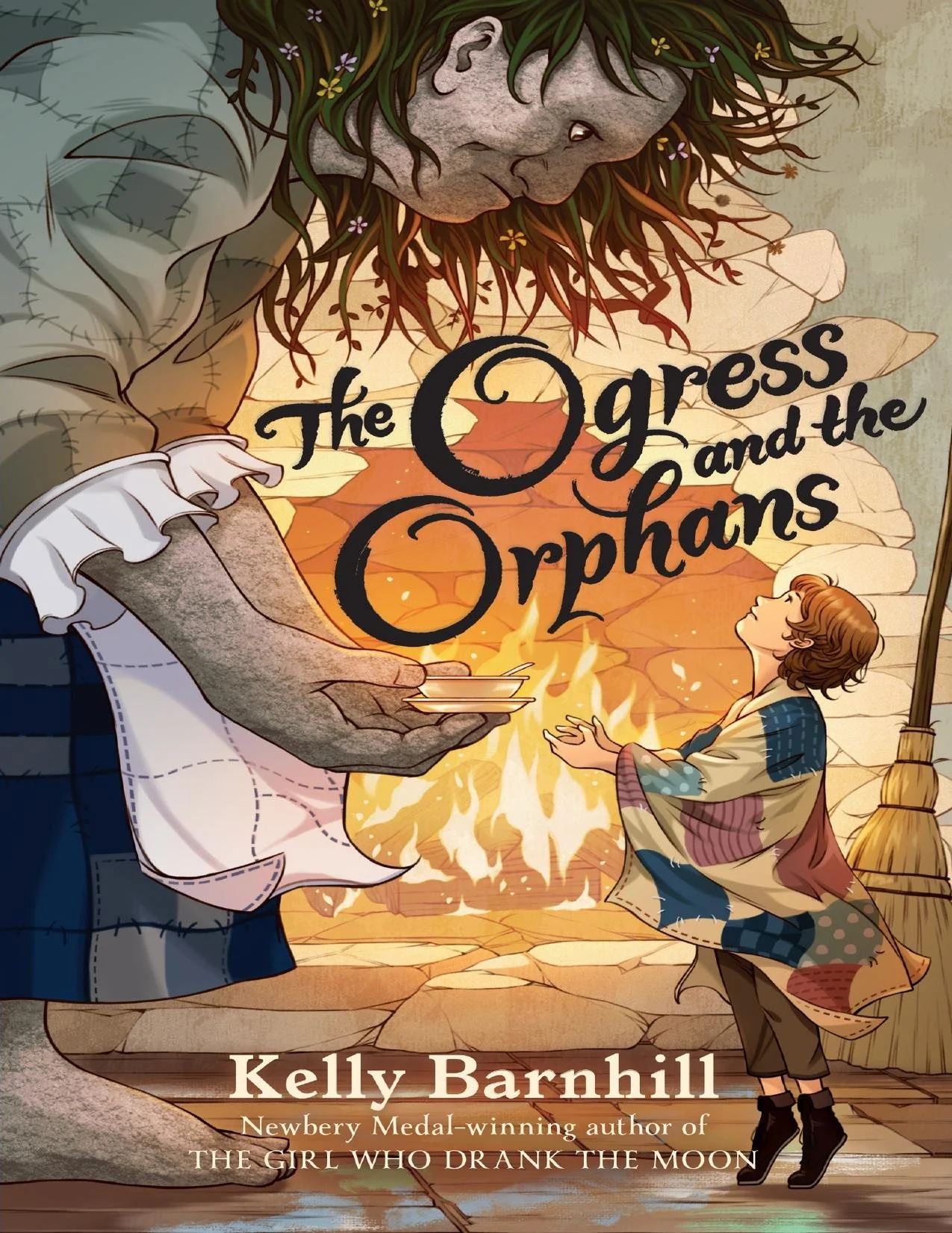
Then Sarah and I read The Ogress and the Orphans by Kelly Barnhill. We could not have planned this better if we’d tried. What a book! What a relatable book. What an uplifting and convicting book. Do not read this book if you don’t want to be challenged to start taking care of your neighbors. You have been warned. In this book, a small town has gone from good, kind, and beautiful to mean, suspicious, and ugly. (I’m not going to give more of the story away than that.) An Ogress looking for a permanent home moves into a nearby farm and takes pity on the town. She decides to help it by secretly gifting the townspeople baked goods every night.
It felt good to be able to share and help others. It was its own sort of belonging. She discovered that she didn’t need much, and she didn’t want much, either—just a bit of shelter, and perhaps a hearth for baking and a pot for soup. Something for herself. Something to share. A way to belong. She learned to trade in kindness and discovered the tremendous value in small mercies and selfless giving. The more she gave, the more she seemed to have. It was the best sort of magic.
This is the drumbeat, the heart, the whole atmosphere of this story: the more you give, the more you seem to have.
Ladies, this whole book is about one woman’s fruitfulness that saved a whole town. Her humble, unseen fruitfulness sparked the fruitfulness of more and more women until beauty, goodness, and kindness returned to the town.
Fruitfulness. It started as thoughts about the sterility of my yard, was teased out into something concrete by The House of Tom Bombadil, and was filled with joyous love by The Ogress and the Orphans.
Side Note: This whole thing is a wonderful example of heart and mind. We have minds to reason (Bombadil) and hearts filled with affection (the Ogress).
All this led me to this observation: If all the women are far from home and away from home for the majority of the day or plan to leave home as soon as their kids start school, is it any wonder this has manifested into whole swaths of land and "dwellings” that are sterile? If we as humanity are struggling with increased infertility, is it any wonder our land is too? Women can’t not be fertile. We are fruitful by nature. We just left our homes believing that we can find true fruitfulness at jobs, leaving a wake of sterility generations wide.[1] The pieces just clicked into place. If we are away from home, we have lawn crews taking care of our yards. Lawn crews lack detailed care. Poisons are spread and plants chopped down without any discrimination. If it is green, it is only allowed to grow this high. Yes, gardening is a constant battle between women and bugs, but it is also a battle with bugs against other bugs. But you can’t be in that fight if you aren’t there. And since we aren’t home, we pour poison on it. Now we’ve solved the bug problem, but we’ve killed our allies and our beauties as well. Sure, no more bugs, but also no more dragonflies and ladybugs and no more butterflies and biodiversity. Now, I’m not saying this is all women’s fault, or that if we all came home suddenly the monarchs would come back, or even that lawn crews are evil. I have a lawn crew. I’m simply noticing that as more women are gone from home, cities are becoming more and more sterile, other than wasps, roaches, racoons, and pigeons.
This goes hand in hand with our current cultural litmus test: is it hard? If something is challenging, hard, or slightly inconvenient, we decide it’s a waste. Listen to how many times you decide not to do something because it takes effort. We are all looking for lifehacks. The problem is not efficiency or skill. The problem is that challenge and effort are treated as bad for us. We’ve made easy the only criteria for good. We’ve explored this idea before in this article. I think because we have made outside-the-home-paid-employment the be-all, end-all point of human existence, especially if you’re a woman, we have to live the lifehack life because no woman can do it all. This is spilling out into our homes and our yards. It takes effort to work with nature, to have dominion. Domination is easy. It takes effort to make a pie. It takes even more to make an extra and share it with our neighbors. Let’s just go buy one for ourselves. That’s the easy way.
But is it fruitful?
On a bare-bones baseline, yes. The yards are green, controlled, and contain a certain level of beauty. The bought pie is tasty and can be a blessing when life is crazy, full, or upended. These can be fruitful and useful. But lean into them too much, become unbalanced in using them, and they can produce sterility. And that sterility can build and build without anyone noticing until, one day, there are no bees and a no women who know how to bake pies. There is no sharing with a neighbor because why would I buy my neighbor a pie? If they want a pie, they can go buy one. In fact, they can have it delivered at the click of a button, no human interaction required. Just like that, we’ve lost fruitfulness and community and accountability and generosity.
So what do we do with this? We start by reading good books like The House of Tom Bombadil and The Ogress and the Orphans – both easy reads. We start opening our eyes to the world around us. We start looking, not for sterility, but for fruitfulness. The sterility is there. We don’t need to look for it. The fruitfulness is there, but it is weak, hidden, humiliated. We need to see, strengthen, and glorify fruitfulness. We do this in our GroupMe chat with our very active Gardening and Cooking threads. I love how full the Gardening thread is in the spring. We need to ask ourselves what fruitful things we’re going to engage in today, and how we’re going to multiply it to share with others. We need to end our day with thankfulness for the fruitful work of our hands. The clean laundry, the clean dishes, the tidy home, the phone calls, the appointments, the pets, the plants, the education, the love of our people should all be rejoiced in. And then we need to go grow some more vegetables, herbs, and flowers welcoming in life, nurturing life, showing true hospitality to the life around us, from ladybugs to children to neighbors. This is to engage in our femininity and the feminine arts.
HearthKeepers, this isn’t a demand that we all try to do it all. We’re not saving the world or the environment or anything like that. Fruitfulness is a mind shift. It is learning to glory in our femininity. This is a laughing, cheerful, exulting dance in the day-in and day-out work that we have before us, because it is good and glorious and fertile. It is being both the beautiful Goldberry and the gentle and generous Ogress. It is the willingness to see beyond the challenge of hard things to the good they will bring us and ours. It is a defiant stand against sterility, done with great gentleness one budding rose, one kind word, one extra pie, one note sent in the mail at a time.
[1] Environmentalist might consider advocating for women to go home so they can nurture gardens, bugs, children, rabbits, sheep, goats, herbs, flowers, children, husbands, and more. Fertility might return to nature.

If you’d like to join our GroupMe chat, click the image above. We are largely a word-of-mouth community, so if you are enjoying our content, please share our articles and podcast episodes with fellow homemakers-maids, matrons, and crones. We would love to have you join the conversation.