A Tale of Two Reviews
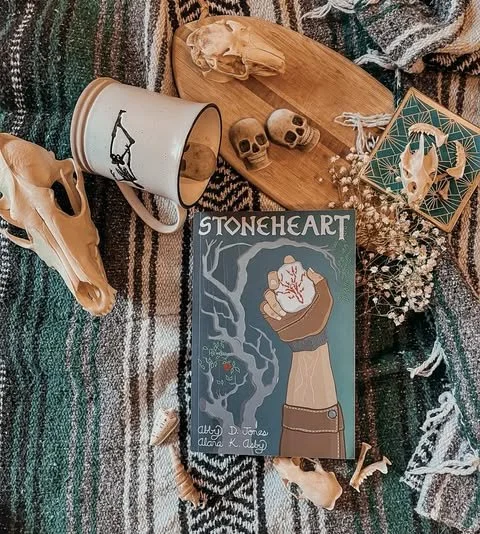
Many thanks to BookstacksandBarbells for this beautiful picture.
Many of us storytellers are a bit odd, peculiar, strange even—we want desperately to be seen and desperately not to be seen. “Look at me! Ahhhh! They looked at me.” (Insert your best “Knights who say Ni” voice here.) Putting stories out into the world is to put part of your soul into the world, and this world holds such wonders as Tolkien, Lewis, and Patricia McKillip. Not only does the storyteller stand exposed, but they also stand beside unfathomable beauty—a toddler’s crayon drawing standing beside Rembrandt or van Gogh. As a storyteller, you want to do for someone through your own stories what those stories have done for you. You want to delight, move, heal, and give someone a mental shift so they see this weary, humdrum world just a bit more magically than they did before they read your tale. You want them to have to keep reading, to feel the horror of the darkness and the lift of hope. You want them to be challenged but also shown the truth. Love, real, palpable love, is poured by storytellers into their books. All they want is for that love to be transferred to the reader. Every storyteller longs to tell these stories but trembles in their heart of hearts because they know they’re not.
Publishing stories is like holding out a part of your soul and inviting the world to scrutinize it. At the same time, a certain distance is created when a novel is published, because we all know that people will apply it to their own unique experience and bring those unique experiences to the book. We all know that readers have personal tastes. One reader's ideal is another reader's over-my-dead-body would I read that. We storytellers know this. A book released into the wild is me and is not me. A book released into the wild is for you and not for you. Publishing creates a bit of space, a neutral zone between storyteller and reader.
(I found this to be one of the many blessings of having a co-writer. That part of my soul that is most raw and exposed exists only in the first draft. Once Alana and I go to work on something together through several drafts, I’ve gained some emotional distance. The book is both me and not me, it is us and not us. Writing together shelters me and us.)
We live in a review culture. Everything we buy, we’re encouraged to review, review, review. Everything we eat, we’re encouraged to review, review, review. Every place we go, we’re encouraged to review, review, review. Without reviews, we’re told, no one will purchase our product. There is some truth to this, absolutely. But reviews lack a certain community aspect that makes them feel fake. They have become a damned if you do, “damned if you don’t” cultural expectation. Each review carries the same condemnation because reviews are subjective.
I tend to find books via word-of-mouth or based on a reference; one book mentions this other book, which mentions this other book, which mentions this other book; someone who knows me tells me I must read something; a podcaster I trust mentions what they’re reading; curated lists on Substack. Do I read reviews? Some. Do they impact my purchasing? Sometimes. If it is clear from the review that the book contains social justice issues, erotica, or bad editing (looking at you, self-publishing industry), I’m not going to read it. That is typically what I’m looking for in a review. Because reviews are subjective, I often read the one-star reviews of a book. A person's one-star might be exactly why I’ll give it five. Reviews are subjective.
As an author, reviews are scary. One has to distance oneself from them. The fear of the one-star review can haunt a writer. We storytellers already struggle with so much self-doubt. Not one of us feels our story is perfect. We could continue to polish forever and still not feel confident. (This can be a good thing because it can guard us from publishing too soon.) At some point, we must put the polishing cloth down and let the story go. There are some brilliant writers out there. Comparison feeds that self-doubt, turning it into self-flagellating demons and monsters. My fear of a one-star review is a fear of the accusation of poor prose, poor character development, poor conclusion, failure to carry on the themes, oh, and a glaring plot hole I somehow totally missed. This is my fear. That, and that it just won’t resonate with anyone. (Nothing like holding out your soul and finding constant rejection.)
Reviews are subjective.
Earlier this year, Stoneheart got its first one-star review on Goodreads. I braced for impact, trying to decide if I wanted to read it or not. Do I want to deal with the reverberating impact of insecurity to my psyche? Before I could overanalyze the situation, I read the review. And I laughed. I was tickled pink. I couldn’t have asked for a better one-star review if I had written it myself.
It was exactly the type of review that would make me want to read the book: “I had DNF this book because of content issues at 25-30%. I don’t want to share all the details to protect innocent readers and their hearts, but this book included sensitive topics like SA and a pregnancy resulting from the SA. There was also more profanity than I was comfortable with. Please feel free to DM me for more information.”
Tickled. Pink.
I am not unaware of the uphill battle Alana and I have created for ourselves. The majority of our readers seem to be women, and yet we’re writing gritty books that many women find objectionable because they’re not safe. (We have so many thoughts on this subject.) Our unwillingness to take the Lord’s name in vain or have sex scenes, but our willingness to deal with violent and ugly things makes it challenging to market Stoneheart. Is our book clean or not? This is a conundrum I’m relatively comfortable with because I’ve been dealing with it for twenty years as I’ve honed my craft. Women are ready readers, but often my beta readers come back with a, “Yeah, I liked it, but it was too dark.” I have found a small handful of women who are as weird as I am and like a big amount of grit in their stories or are willing to trust me as I lead them through darkness to the light. Gaining this trust takes time. No, our stories aren’t safe, but they are good. (See our extra-long article that touches on this more.)
Stoneheart isn’t safe. It wrestles with dark subject matters, but it extols virtue, motherhood, home, family, community, and love. It champions courage and sacrifice. It has hope and redemption. It just isn’t tea-party pink. It’s dirt under the nails, gun at the ready, standing against evil…which requires evil.
One reader once told me, “Paint the canvas black, and at the last moment raise the sun.” This is what I do in every story. You can’t have the resurrection without the cross or a rainbow without the flood. As a storyteller, this is a place I fit. I will always stand here at the edge of darkness, facing the sun.
“So give me hope in the darkness that I will see the light…”[1]
This delightful, honest one-star review ripped the band-aid off. I now feel more sturdy facing reviews. Deep breath. Big-girl pants on. Hold the line.
Then we got another review. This was a five-star review from a bookstagramer on Instagram:
“Ultimate book of THE year! If you like: Mad Max, Firefly and Sahara then buckle up for a wild adventure full of sci-fi and western grittiness. This book is full of: grit, pain, trauma, healing, adventure, tough characters, soulless characters, magic and a touch of romance and love that’ll make you believe goodness can absolutely come out evil situations.
5/5 stars and this book is now a part of my books that are my top favorites.”[2]
This was high praise.
This was the love that every storyteller hopes their reader has for their stories.
This, too, made me laugh.
All the things that my one-star reviewer found objectionable, my five-star review didn’t. My five-star reviewer embraced the darkness, the grit, the horror, and was rewarded with a happy ending and a satisfying story. They willingly went on the journey with Sul, Psyche, and Rune and loved it. We have gained one more reader's trust.
(Can we talk about how much this review made me cry?)
Reviews are subjective.
When I held Stoneheart’s one-star review up beside Stoneheart’s five-star review, both from women who don’t know me, aren’t my friends or my mother, I realized that one man’s trash is another man’s treasure even when it comes to stories. What makes one reader dislike a book may be exactly what makes the next reader love a book. What makes one reader rage-quit may be what speaks the loudest to another reader. When we storytellers release a book into the wild, it is vital that we patiently wait for our people to find us. I truly believe that there are women out there who want stories that are dark before they’re light, that have weight, that cost the reader something to read. I truly believe that there are men out there who want stories with action, guns, and love, even if it is written by two women. Stoneheart just has to wait until these readers find it, and a one-star review about our grit-level is how that happens. So is the five-star review about our grit-level that made me cry because someone loved our story.
Two reviews that said much the same thing in different words. Two reviews that gave us opposite reactions. Two reviews, one said Stoneheart is the book of 2025, and the other couldn’t even finish the story. Two reviews that keep pushing Stoneheart towards its intended audience and keep us telling stories. Just keep telling stories.
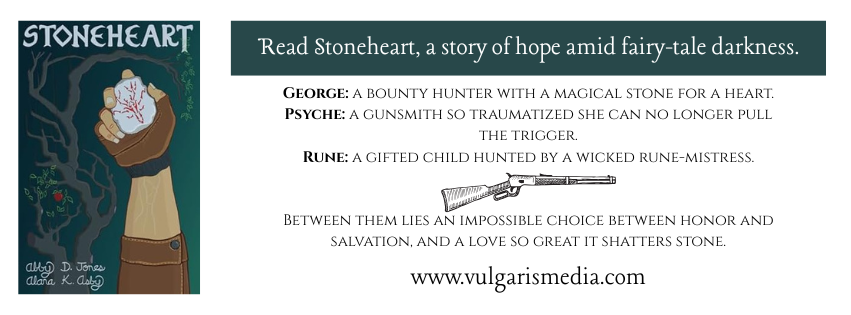
Click on the image to order.
Thanks as always for editing my stuff into something better!