Why I Quit True Crime
In what I’m sure is totally normal father/daughter behavior, my dad handed me Mind Hunter: Inside the FBI’s Elite Serial Crime Unit by John E. Douglas and Mark Oshaker to read when I was about 18. This set off almost twenty years of true crime passion. I read books, watched documentaries, researched more and more about serial killers, looked at crime scene photos, and listened to podcasts. Often people would ask me why. Why did I spend so much of my time in the world of serial killers? I had four reasons:
Looking at the Heroes: The thing I loved most about True Crime was learning about the detectives who hunted and caught serial killers. When you have great evil stalking in the darkness, you need good men to hunt it down. I wanted to hear from these men how they did it. I wanted to honor them. I believe it is important for citizens to see what their safety costs those around them. (This applies to our military as well.) The sacrifices they made, the work they put into catching these monsters touched my soul. I wanted to honor their courage, dedication, bravery, and fortitude. They’re real-life inspirations. And every once in a great while, you got to hear a story about how they punched a serial killer in the nose—always satisfying, if rare. These detectives carried horrible burdens their whole lives for the people they couldn’t save, the killers they couldn’t stop. This was the part of true crime that I loved.
Psychologically Fascinating: For many years, I would tell people that in my next life I was going to be an FBI profiler. The study of what makes someone become a serial killer is absorbing and intriguing. It is the ultimate and extreme illustration of the question of Nature vs. Nurture. The study of the patterns of behavior, organized vs. disorganized, the MO, the signature, victimology, and what makes them what they are had a tight hold on me. The whole point of Mind Hunter and even Silence of the Lambs is how do we get into their heads, understand them, so we can stop them? They are outliers, but there are still patterns and psychological commonality to be found. It is a truly fascinating study of humanity. Why? Why do this? We easily grasp murder between people who know each other, but what drives a human to kill people they don’t know over and over? It was a desire to understand the why.
Women are the Victims and the Creators: The majority of serial killers prey on women. If you want to know how to protect yourself, you need to know what is hunting you. I thought the best way to protect myself was to know what was out there and how they tended to collect their victims. I can’t be on guard if I’m ignorant. But the other side of the coin is that the vast number of serial killers that have been studied are the way they are because of their mothers. What a terrifying thought. This made me sit up and pay attention. How important is our work as mothers when we have the power to create these kinds of monsters through our neglect or our overprotection?
Growing up adjacent to the Golden Age of Serial Killers: I was born in 1980, and when I was four, my parents moved to California. I not only lived through the majority of the so-called Golden age of Serial Killers (1970-2000) but lived where they were most active. In a way, serial killers were part of the wallpaper of my life. I remember my dad telling me not to ever help a man with a broken arm, but to go to a populated place and find a cop or a mother to help me. (At the time, I thought this the oddest of instructions. Then I learned about Ted Bundy.) I remember hearing about bodies found in trash bags on the side of the road before my mom could switch the radio off. My dad spent a large part of our childhoods teaching us to shoot, reminding us to always shoot at least twice, and to never, ever, ever get in the car with someone, even at gunpoint—better to die in the parking lot than to go wherever you were being taken. All this was just part of life for me. Once I started studying True Crime, I realized what my parents were both trying to shelter us from and prepare us for: the monsters of our day, serial killers.
Over the years, especially in the last decade or more, True Crime has become more and more popular. At first, I enjoyed this. I had more and more to read and watch and listen to, and more and more women to discuss this with. I even had a dear friend who was a forensic anthropologist. I found Paul Holes and followed the final closing moments of the Golden State Killer Case. True Crime surrounded me, and I enjoyed every minute of it. Then, one night, as I hunted for some True Crime documentary to watch, a thought struck me: How is this not all gossip? Every documentary I flipped to was about so-and-so sleeping with so-and-so, and so she killed him, or there’s a new life insurance policy and a shockingly dead policy holder. Gasp. No more were the books, documentaries, and podcasts about the detectives hunting monsters, the psychology of serial killers, the victims who shouldn’t be forgotten, the environment of the murderers, or the history of the Golden Age. (If serial killers started to rise in the 1950’s how did WW2 impact that? Did it give rise to a generation of murderers? There is so much to explore there!) Movies were starting to come out that made the murderers famous, almost glorifying them, turning them into cultural anti-heroes. More and more of the fiction started to paint the detectives as only morally a step or two above the killers, if they didn’t flat out make the killers more likable. (Let’s not even talk about the rampant lack of accuracy on almost all law enforcement shows.) On some of the cop podcasts, there was a rising concern that we were actually arming future serial killers, basically giving them guides and handbooks. The whole culture around True Crime started to turn my stomach. I felt like I’d gone from researcher of human psychology to voyeur. True Crime as a genre had become salacious, gossipy, whispered tittle-tattle. It became part of the standard white girl aesthetic: true crime, murder, torture, pumpkin spice latte. There was so little thought put into the burden of the detectives, their brokenness, their shouldered horror.
True Crime was gossip. We think it’s all okay because I’m not telling my sister about you-know-who-doing-you-know-what. These are all people I didn’t know. This is all public record. It’s fine. (We do the same thing with sex scenes in shows and books now. We’re consuming porn all the time and acting like it’s okay.)
That night, when all I could find were stories of adultery that led to murder, was the death knell for my love of true crime. I no longer felt inspired by detectives willing to step into darkness to protect the weak; I felt like I needed a shower. No longer was I studying history and psychology at one of their most extremes, I was filling my mind and using my time to hear about petty arguments, betrayals, and family murder. I was sickened by the genre and sickened by myself.
One of the more subtle reasons I started to pull away from True Crime was the rise of the Internet Detective. As much as I loved TheMurder Squad and even I’ll Be Gone in the Dark, as much as that life of research to solve the crime and catch the killer appealed to me, the attitude around the cyber sleuth concerned me. The Murder Squad was a podcast anchored by a cold case detective and a cyber sleuth. The number of times I wanted to reach through my phone and deck the cyber sleuth is uncountable. His attitude towards detectives was so arrogant. He failed, constantly, to understand how the law works and then blamed the detectives for working within the bounds of the law. He would protest police brutality one moment and then demand police officers break the law to catch a possible killer the next. His co-anchor, who had actually solved many crimes, had more patience than I did. But this is all an illustration of the problem with the True Crime consumer. We begin to think we know, and then we become online judges, juries, and executioners. We do not wait for the law. We don’t understand that the law is there to protect people, imperfectly, yes, from being falsely accused. The law moves slowly, builds a case, and has rules for how that case must be built. I had an acquaintance who was absolutely drawn and quartered online, only to be acquitted when the case went to court with real police officers, real detectives, real judges. Unfortunately, he’d already been destroyed online. His life and his family were ruined enough by the real-life accusations and process of proving his innocence. It was horrifically mutilated by the online community. The online investigative community assumes guilty until proven innocent, but if you are proven innocent, we won’t admit we were wrong. We’re already onto the next thing.
This growing, subconscious tendency to adjudicate without the law and rules from behind the safety of a computer screen made me start distancing myself from True Crime. It was growing more and more odious in my heart every day.
For much of my adult life, I loved True Crime, but over the last several years I started perusing other interests, reading and watching True Crime stuff less and less, growing more and more dissatisfied with the genre as a whole. Today, I have no interest in it. I still find the psychological study of serial killers fascinating. I’m still thankful for the detectives who went after these killers. I’m just no longer interested in the genre itself because of the community it has become.
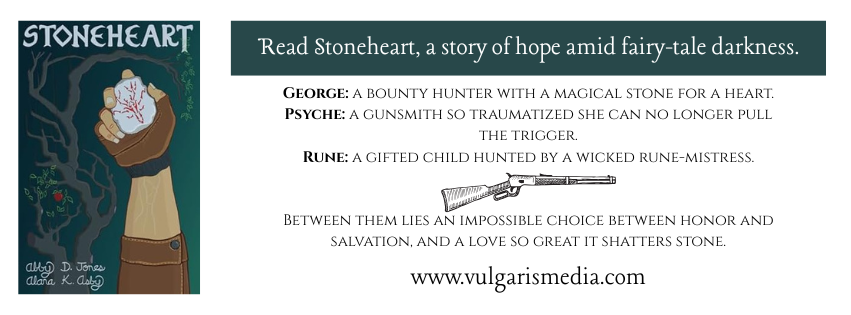
While we all wait for Wizard Prison to be finished, may I suggest checking out our debut novel? It is, shockingly, set in the winter.

Thank you, as always, for the edits!